


Mon-Fri 9am-5pm
Talk to our friendly electric car leasing experts now: 01942 910 001This website uses cookies to ensure you get the best experience. Learn more
How the Kia PV5 Cargo is helping more small UK businesses go electric with their vans and commercial vehicles
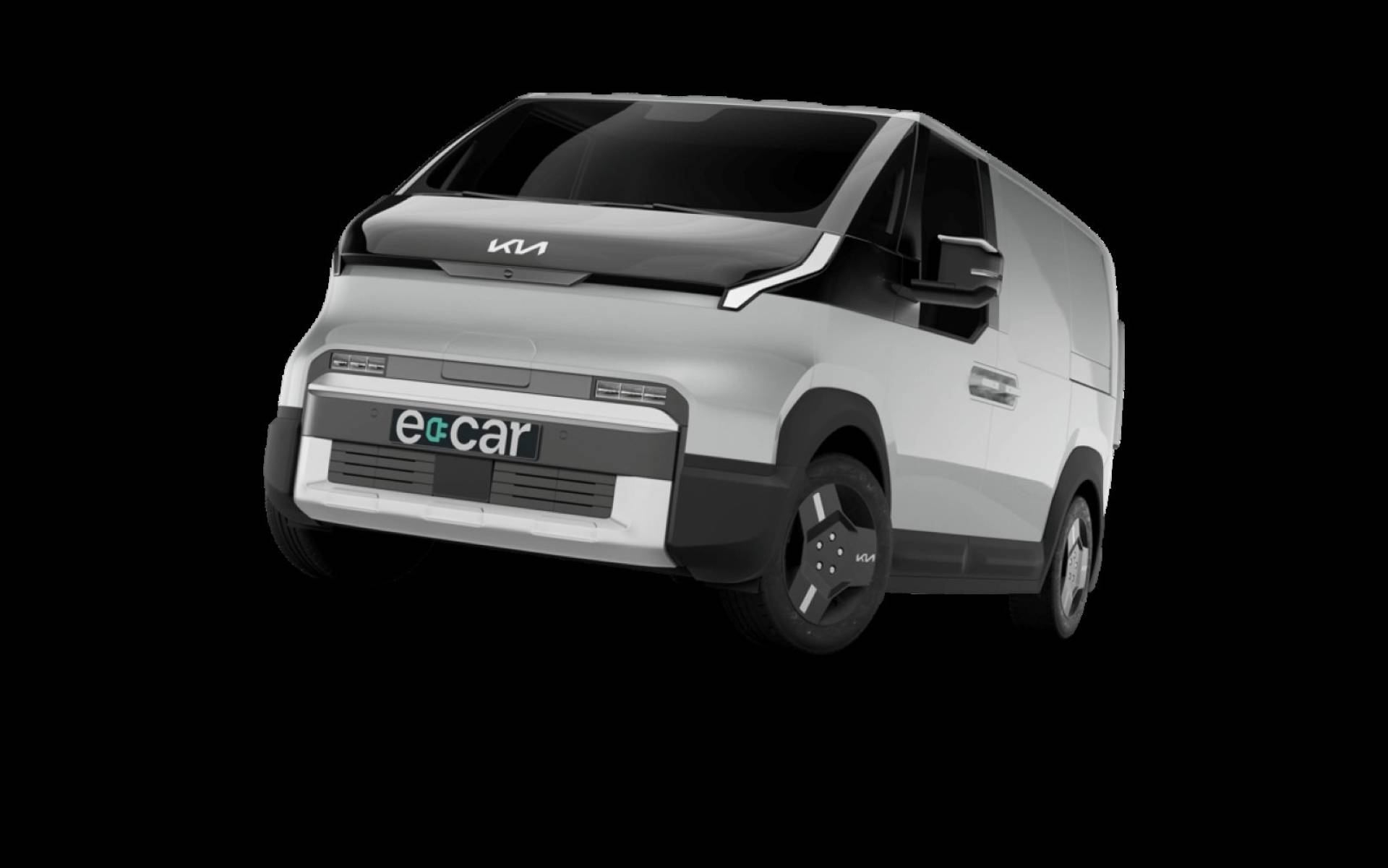

Going electric with the Kia PV5 Cargo - Helping UK businesses with their vans
The Easter weekend has been a productive one for the Kia group, as they announced yet another EV would be added to the UK's list of grant applicable vehicles.
Their Kia EV3 will now be joining the EV4 and the PV5 Passenger, as a Band 2 vehicle. What this means is that the UK Government will provide a whopping £1,500 support for any of the cars assessed to lie within this zero-emission category.
Not all electric cars are able to get this type of grant; there are a set of qualifying criteria which determine suitability and the application of the financial support. In short, it has to be an M1 passenger vehicle, produce no CO2 from the tail pipe, have a range of 100 miles+, have a 3-year or 60,000 mile vehicle warranty and an 8-year or 100,000 mile battery warranty.
In addition, there are further criteria relating to the manufacturing of the vehicle, which does impact the grant level. For those who do qualify, the Band 1 offers £3,750 Government support on their vehicle like the Ford Puma Gen-E, Mini Countryman Electric, Nissan Micra and the Renault 5. A bigger list, including the Kia options, can be found in the Band 2 section. But are vans (or LCVs) treated the same?
As electric vans do need more help and support, the UK Government is providing more robust levels of financial support for manufacturers and customers to benefit from. Where Kia really benefits is that this qualifies as a Big Van under the rules of the grant.
This means that up to £5,000 is available to support the purchase / lease of the vehicle, as this qualifies under the rules. In particular, the van has a gross vehicle weight between 2,500kg and 4,250kg, can travel 60 miles+ on an electric charge and produces no tailpipe emissions (0g/km). At a time where the cost of motoring is increasing and small business fleets are feeling the squeeze, having the ability to benefit from a supportive grant has not gone unnoticed.
Running costs of our vehicles have often been a valid reason for personal and business customers to change their car from petrol / diesel into a lithium-ion battery one.
However, for vans and commercial enterprises this has been ignored, with the overriding view being "not just yet" or that electric is "impractical for vans". However, with the increasing cost of oil now a global crisis, the price at the pumps is making UK SMEs really consider if they can afford NOT to consider an electric van instead of their diesel option.
While it is true that advancements and technology in the car market have been more profound, there is much change for vans with a series of new options like the VW Transporter Electric and Kia PV5 Cargo, which are practical, ergonomic and usable.
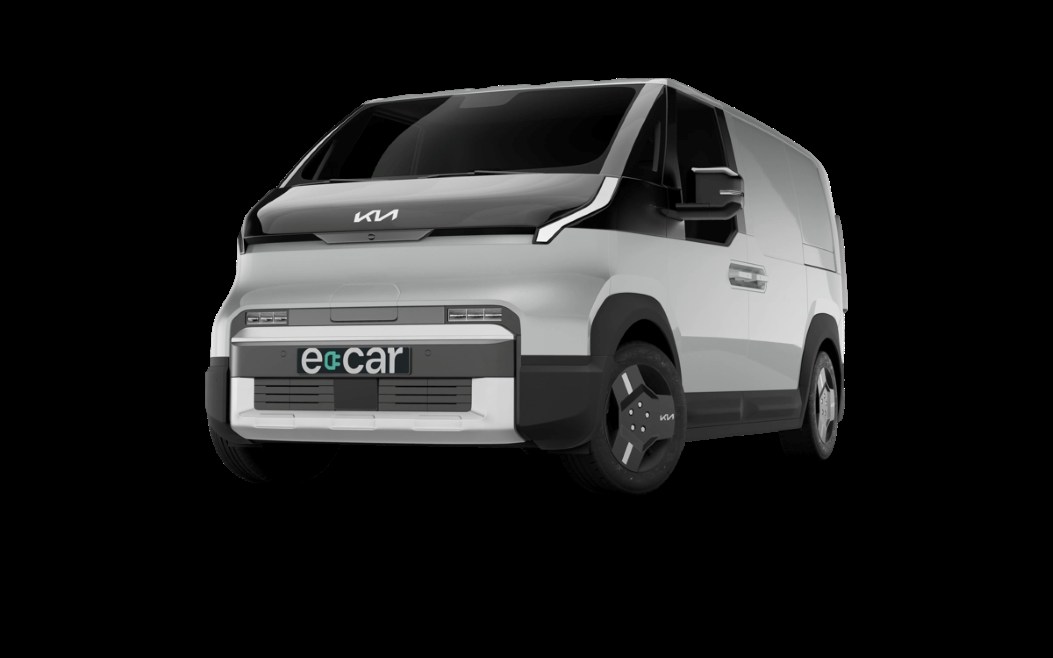
For your builders, joiners, electricians, plumbers and tradespeople, these vans really do make for a practical tool. All it takes is a little education and you can soon understand how easy it is to move your fleet across.
Vehicle ranges on the vans have been improved in line with battery innovation, especially when you take into consideration the payload. However, before range becomes a concern, you need to understand your needs beforehand.
With many van users actually covering less than 12,000 miles per annum, the daily requirements on their vehicle are not as substantial as envisaged. Many local businesses are actually covering stop/start type journeys in congestion / busy towns and cities.
This is perfect on how an EV works. Let's face it, the lack of manual gears and instant torque makes for a much easier and fun driving experience. The performance of an electric van should never be underestimated. In addition, there are some further incredible benefits:
- Fuel - if you charge at home or at work, the cost of electricity is far cheaper than diesel. With a dedicated overnight tariff from your electricity provider, you can charge from as little as £5 for a full tank of fuel! In 2026, this is a fraction of the cost compared to the cost of a petrol station. For some UK businesses this is the key reason to make the switch;
- Chargers - while the initial cost of a dedicated chargepoint is around £500 - £1,000, in having a dedicated point you can charge at your own convenience. When you wake-up in the morning or arrive at work, the vehicle is fully-charged and ready to go. There are no delays or inconveniences of going to a fuel station;
- Servicing - the cost of servicing and fixing your combustion vehicle is not cheap. This becomes more obvious with older vans, where the maintenance is obstructive on costs. Electric vehicles need far less servicing due to the absence of moving parts. When they do need a service, the costs associated with this are much lower. FYI - the PV5 Cargo is every 24 months or 20,000 miles;
- Clean Air Zones - as the UK becomes more emissions focused, cities across the UK will charge the more polluting vehicles for entering their busier zones. Zero-emission vehicles will not be subject to this; and
- Technology - the investment in the future of our vehicles is now heavily focused on the electric side of things. This means that the vehicles being produced are the next generation of driving with practical and driver-focused aids to boost comfort, safety and enjoyment.
-
The new PV5 Cargo van lease could be your perfect business partner
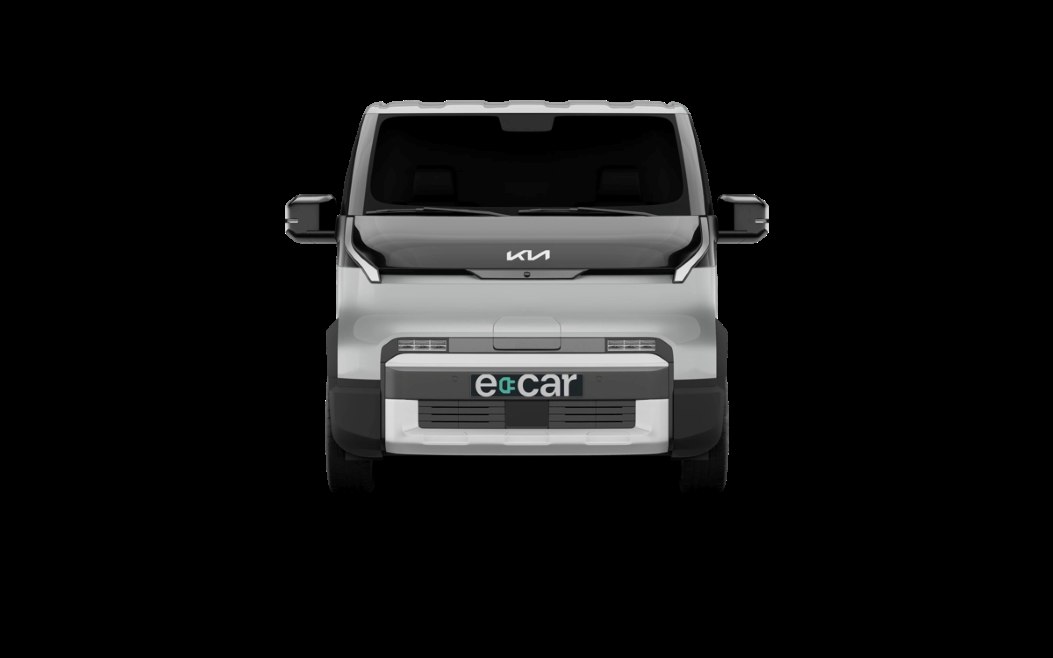
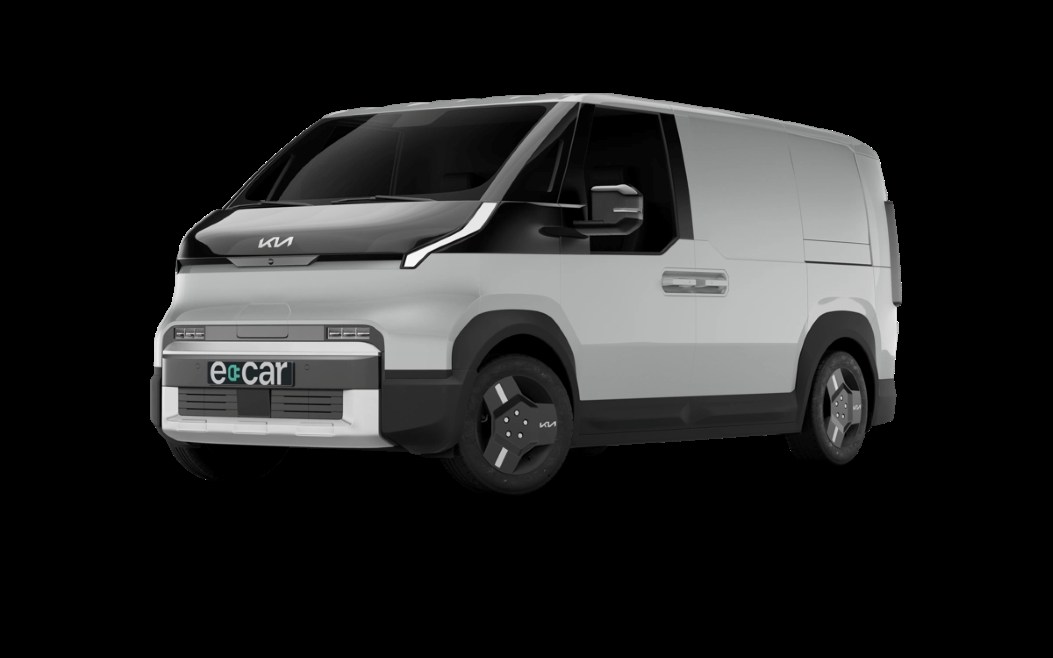
In terms of the van shown, the Kia PV5 CARGO ELECTRIC 120kW Plus Long Range 71kWh Van Auto Pure Electric Vehicle, this is based on the following configuration:
- Clear white Solid paint
- Cloth - Dark Blue
- 16" Steel wheels with full size wheel cover
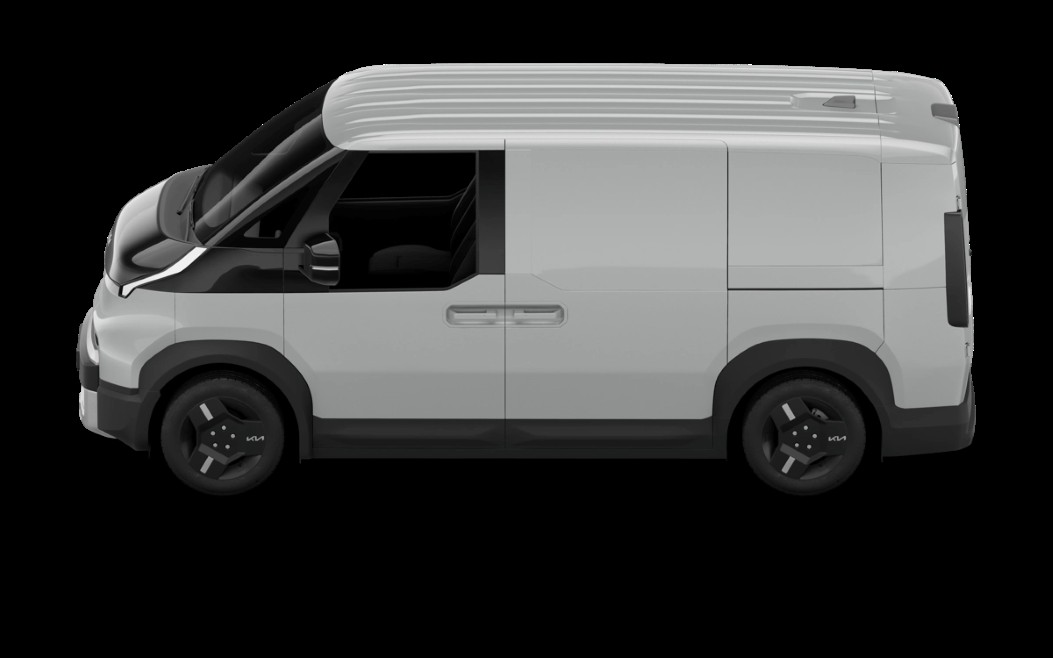
The key specification options include:
- Essential – this includes 16” steel wheels, tinted rear glass, LED headlights, electrically adjustable mirrors, body coloured bumpers, rain sensing wipers, air conditioning, stop/start button, smart entry system, dual sliding doors (manual), 12.9” touchscreen, navigation, 7.5” driver display, OTA functionality, front/rear parking sensors, reversing camera, forward collision avoidance, smart cruise control, intelligent speed limit assist, lane following assist, smart key and Thatcham Category 1 alarm; and
- Plus – this adds 16” alloys, electric folding mirrors, heated front seats, driver and passenger lumbar support, heated steering wheel, power tailgate, V2L functionality, wireless phone charger, rear cross traffic alert, safe exit warning and the optional heat pump.
The L2/H1 offers (in a Long Range) a 1885kg kerb weight, 690kg payload, 750kg Braked Trailer Weight and a 100kg Roof Load Capacity.
There are two main battery formats including:
- The Standard Range 51.5kWh battery - this FWD Van will have a 48 kWh usable battery which will offer 0 – 62 times of 12.8 seconds, 84mph top speeds and 89kW (or 119hp). Expect a combined winter range of 120 miles with warmer weather allowing for 160 miles – a 140 mile combined. On charging, the 11 kW AC max will allow 5 hour and 15 min 0 – 100% charging times with the 150 kW DC maximum allowing 28 minute 10 – 80% times. It has a vehicle fuel equivalent of 118 mpg. You can tow with this EV – 750kg (Unbraked) and 750kg (Braked). It does have Bidirectional capabilities with the V2L functionality via the 3.6kW AC exterior and interior outlet. The Heat Pump is available as a cost option; and
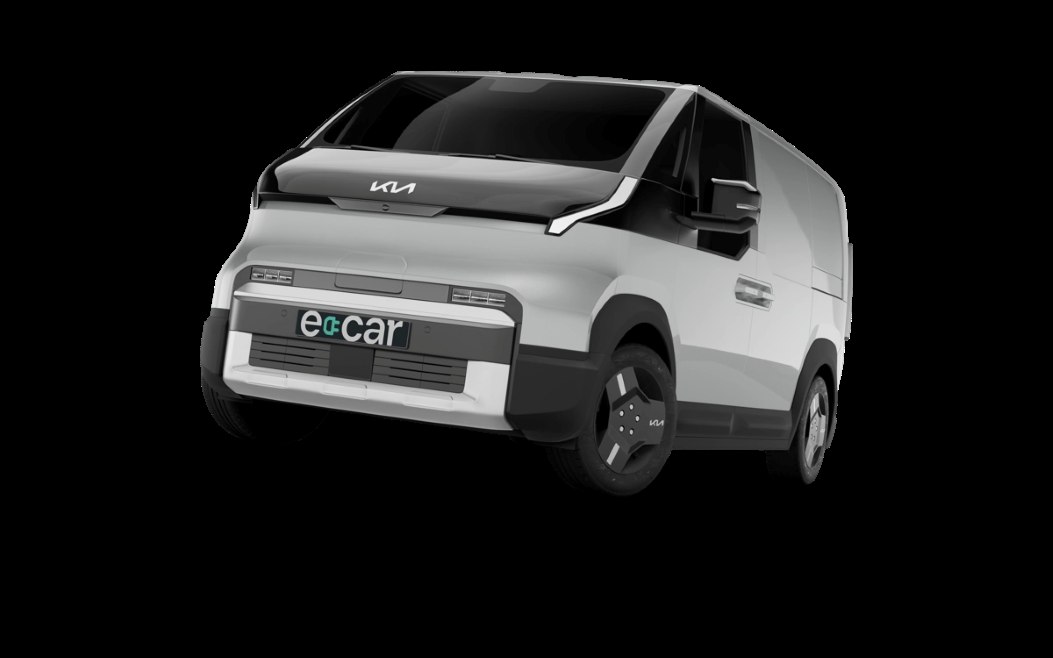
- The Long Range 71.2kWh battery - this FWD Van will have a 67 kWh usable battery which will offer 0 – 62 times of 10.6 seconds, 84mph top speeds and 120kW (or 161hp). Expect a combined winter range of 165 miles with warmer weather allowing for 220 miles – a 195 mile combined. On charging, the 11 kW AC max will allow 7 hour and 15 min 0 – 100% charging times with the 150 kW DC maximum allowing 39 minute 10 – 80% times. It has a vehicle fuel equivalent of 118 mpg. You can tow with this EV – 750kg (Unbraked) and 750kg (Braked). It does have Bidirectional capabilities with the V2L functionality via the 3.6kW AC exterior and interior outlet. The Heat Pump is available as a cost option.
For more help or advice on Electric Vans just head to our Electric Vans Guides section - Don’t forget to call our expert term at e-car lease on 01942 910 001 or email at [email protected].
e-car lease work alongside these select finance companies:





e-car lease have a partnership and affiliation with:



Register & get new deals weekly
 Exclusive offers
Electric-only deals
Never miss out
Exclusive offers
Electric-only deals
Never miss out
Talk to one of our experts
01942 910 001 Email usLeasing





© Copyright 2026 e-car lease. All rights reserved. e-car lease is a trading name of CarLease (UK) Ltd, e-car lease is a credit broker and not a lender. We are authorised and regulated by the Financial Conduct Authority. Registered No: 706617. BVRLA Membership No. 1471. Registered in England & Wales with Company Number: 09312506 | Data Protection No: ZA088399 | VAT No: 200422089 | Registered Office: Kings Business Centre, Warrington Road, Leigh, Greater Manchester, WN7 3XG
Made by morphsites®