


Mon-Fri 9am-5pm
Talk to our friendly electric car leasing experts now: 01942 910 001This website uses cookies to ensure you get the best experience. Learn more
Charging Speed vs Range on the BMW iX3 electric car Lease
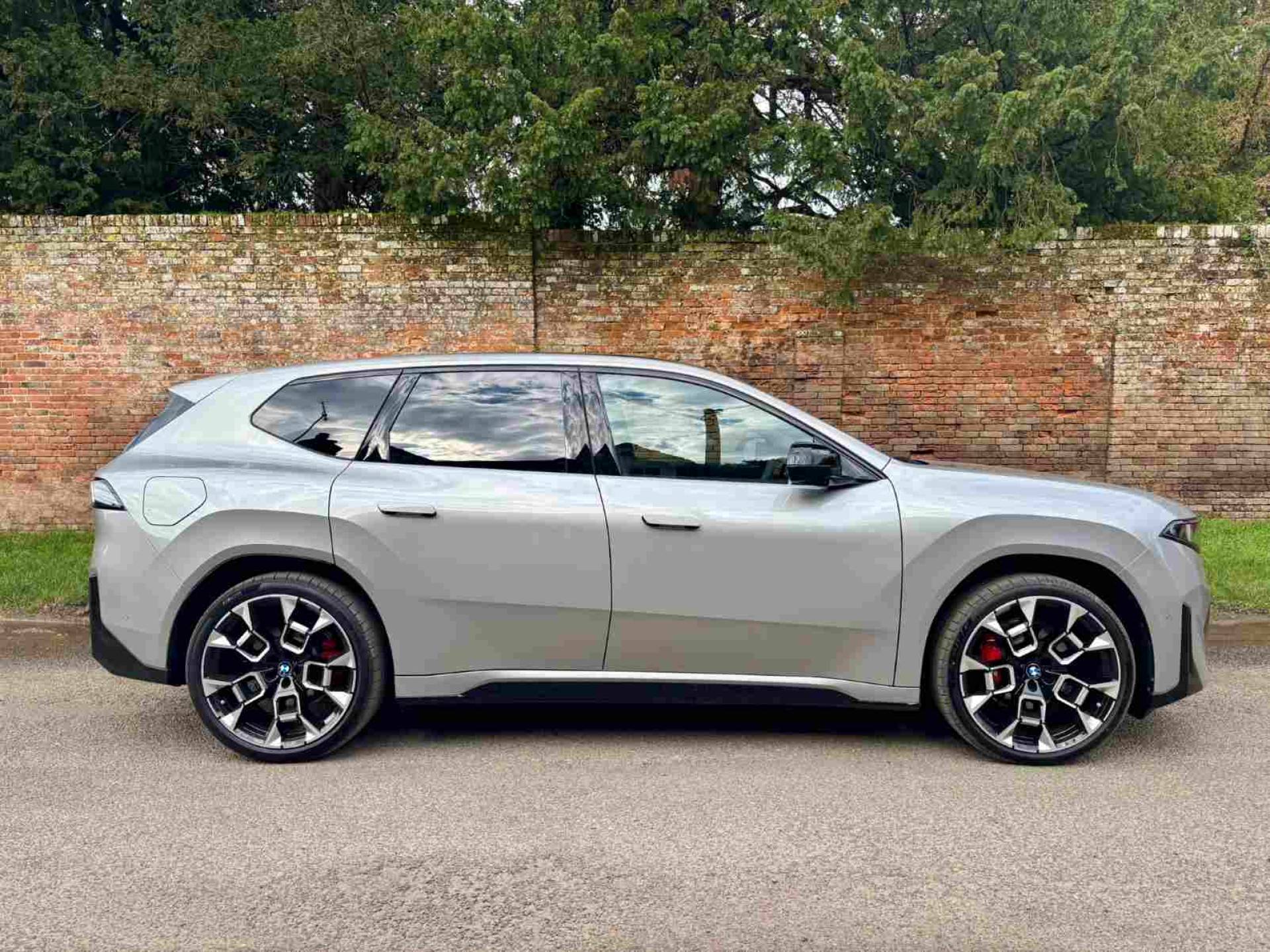

The BMW iX3 electric car Lease - Charging Speed vs Range
So is range better than charging time?
As we covered in the recent blog on this, we highlighted how BYD are investing heavily into charging speeds in their vehicles (via the BYD Blade 2.0) and the charging infrastructure to deliver the necessary speeds to keep up with the improving charging capacities of the batteries being innovated.
However, the obvious restriction in the UK is the current evolving nature of the public charging network at the services and dedicated charging stations. As shown via Zap Map , there are more robust rapid chargers going into towns and cities across the UK which are able to offer 150kW DC+; in some cases 250kW DC is a realistic proposition. So, does this settle the conundrum?
Well not exactly. The necessity for public charging, especially for those with no home charging solutions, is not always the same across the UK network. Driver lifestyles and behaviours almost certainly do vary. Therefore, having access to a vehicle with significant charging speeds, or an incredible charging facility, may be less desirable.
Especially if the range of your vehicle is more than capable enough to meet the demands of your journey. Not unlike the ability to charge, the ability to keep going over long distances is also improving as manufacturers invest more in their battery capabilities.
While there are obvious restrictions in the capabilities of the chemistry behind the lithium-ion battery tech, we are witnessing some beneficial updates which are allowing our vehicles to travel some considerable distances, without needing an oversized battery capacity (shown as kWh on the vehicle).
Dating back to 2020, which we call the seminal year for electrification, having a vehicle able to go more than 200 miles on a full charge was considered beneficial. To go more than 250 miles was thought to be exciting. But to go more than 300 miles?
That was thought to be "the future". In 2026, we are very much at this juncture, with more vehicles able to hit the heights which was considered almost improbable 5/6 years ago. While at e-car we do help drivers dissect their actual journeys and the way in which driver style and behaviours influence this facet, there are many high-mileage customers who do need the capability to keep moving 200 miles+ without stopping to charge.
Or who do not have a home charger and do not wish to rely on public charging networks all the time.
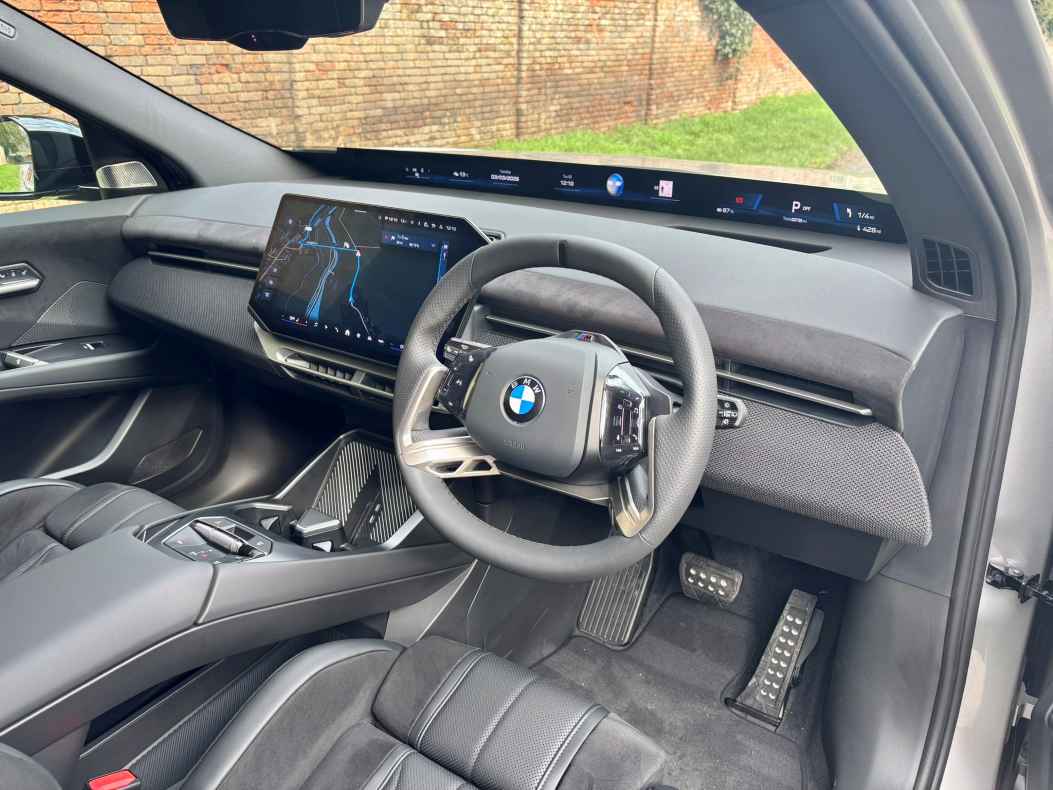
One brand proving this point is the BMW Group, with their biggest release to date - the BMW iX3. This medium SUV is a reignited product moving the German brand to the forefront of many company car and salary sacrifice schemes.
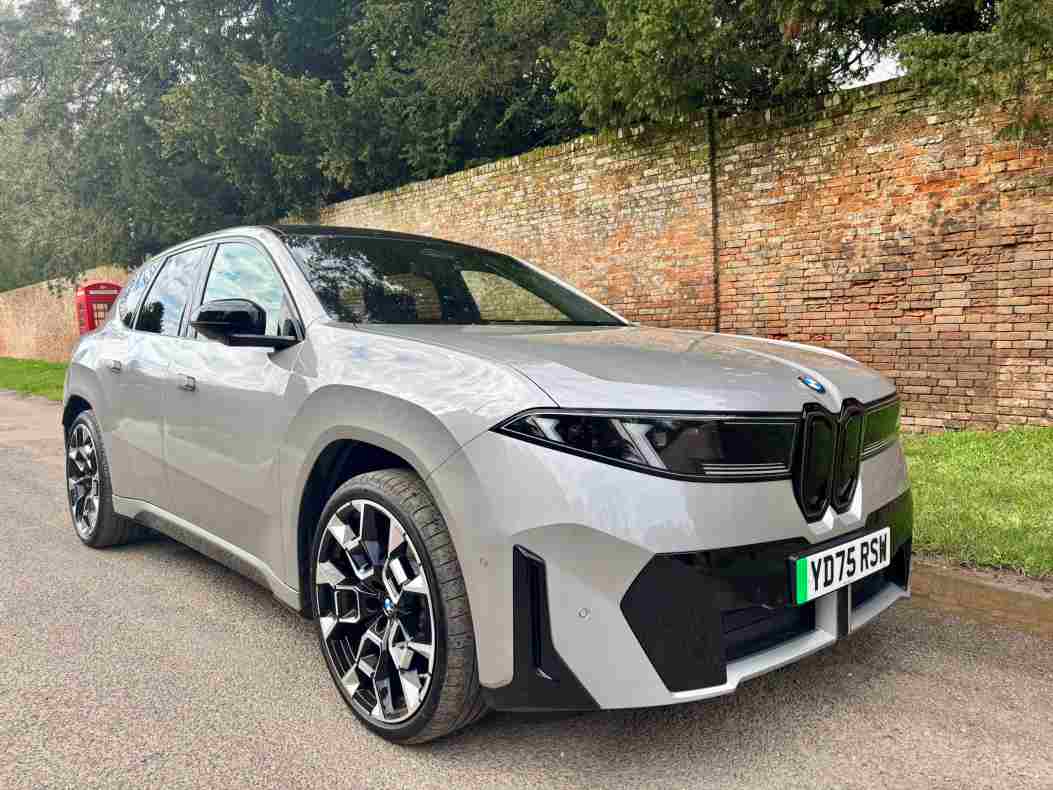
What makes it so special? - the fact the car has an overall real-world range of 375 miles. As we do set out on the e-car website, our Electric Vehicle Comparison has a robust overview of the best vehicle range in the UK. As at March 2026, only the Mercedes EQS has a better range capability than the BMW (and that is being discontinued), making this THE vehicle option that many 20,000 mile per year drivers are going to want to consider.
However, with “range” we do always ask a customer to properly consider and understand that a BEV will always operate in accordance with certain facets like vehicle speed and external temperatures. For example, the iX3 will operate as per below:
- City Driving - 360 miles in colder weather and 540 miles in warmer weather; and
- Highway / Motorway Driving - 270 miles in colder weather and 350 miles in warmer weather.
This is why your individual driving conditions do need some degree of analysis. For example, town and city centre driving, which is often stop/start and heavily congested, is actually perfect for an EV. This is where they thrive. In contrast, higher speeds on the motorways do tend to use the battery more prevalently, especially in colder climates.
.jpg)
We don’t use the WLTP inflated mileage and approach for this very reason. Especially when many bigger capacity battery vehicles - the BMW iX3 has a usable 108.7kWh config - do cost more money. The ability to enjoy a car with range is not free and there will be some form of additional cost within the purchase / lease for this attribute. You therefore need to consider if it is really giving you, or the fleet, true value for money for that extra comfort.
Without a doubt, consumer confidence is massively important in the UK. Newer vehicles which are showcasing the technological evolution of our BEVs is instilling a bigger commitment to pursue this route above a traditional petrol and diesel option. For many 1st time drivers, we really do appreciate the nervousness and trepidations; we all start from the same position of ignorance.
However, when the average EV has 250 miles combined (real world) on our website, we are truly heartened by the increasing practicality and robustness of the products being offered to our personal and business customers.
Range or Charging? You decide.
What about the BMW iX3? Head to the BMW manufacturer website to create your favourite options. Choose from:
- iX3 standard - from £58,755 this includes 20” alloys, wireless charging, active guard, heated front seats, automatic tailgate, comfort access sytem, LED headlights, automatic air conditioning and memory seats,
- iX3 M Sport - from £61,255 this includes key features like 20” sports alloys, M Sport brakes, M sport embellishments,
.jpg)
- roof spoiler, sports steering wheel, Panoramic Vision and M Black interior design; and
- iX3 M Sport Pro - from £62,755 this includes Iconic Glow exterior package, mirror caps in black gloss, M Steering wheel and M Sport Seats / Belt.
Key colours include the Alpine White, Brooklyn Grey, Space Silver, Fire Red, Black Sapphire and Ocean Blue. Key upgrades include the M Steering Wheel, Technology Plus pack (3-zone climate, 3D HUD and Harman/Kardon audio), sun protection glass, heated steering wheel, AC charging professional (22kW AC) and the panoramic roof.
How does the new iX3 perform?
- 50 xDrive - this AWD SUV will have a 108.7 kWh usable battery which will offer 0 – 62 times of 4.9 seconds,130 mph top speeds and 345kW (or 463hp). Expect a combined winter range of 315 miles with warmer weather allowing for 430 miles – a 375 mile combined. On charging, the 11kW AC max will allow 11 hour and 45 min 0 – 100% charging times with the 400 kW DC maximum allowing 21 minute 10 – 80% times. A cargo volume of 520L is available with this car. It has a vehicle fuel equivalent of 140 mpg. You can tow 750kg (Unbraked) and 2000kg (Braked). The new iX3 has Bidirectional Charging - it also has V2L capabilities via an external 3.7kW AC type 2 adapter. The Heat Pump is available as a standard option.
Want to know more about going into the BMW SUV Electric?
Head to our dedicated BMW special offers section or speak to our experts directly on 01942 910 001 or by emailing us at [email protected]
e-car lease work alongside these select finance companies:





e-car lease have a partnership and affiliation with:



Register & get new deals weekly
 Exclusive offers
Electric-only deals
Never miss out
Exclusive offers
Electric-only deals
Never miss out
Talk to one of our experts
01942 910 001 Email usLeasing





© Copyright 2026 e-car lease. All rights reserved. e-car lease is a trading name of CarLease (UK) Ltd, we are a credit broker and not a lender. We are authorised and regulated by the Financial Conduct Authority. Registered No: 706617. BVRLA Membership No. 1471. Registered in England & Wales with Company Number: 09312506 | Data Protection No: ZA088399 | VAT No: 200422089 | Registered Office: Kings Business Centre, Warrington Road, Leigh, Greater Manchester, WN7 3XG
Made by morphsites®