


Mon-Fri 9am-5pm
Talk to our friendly electric car leasing experts now: 01942 910 001This website uses cookies to ensure you get the best experience. Learn more
If EVs are to dominate the UK by 2030 are there enough affordable options to lease like the Smart #1?
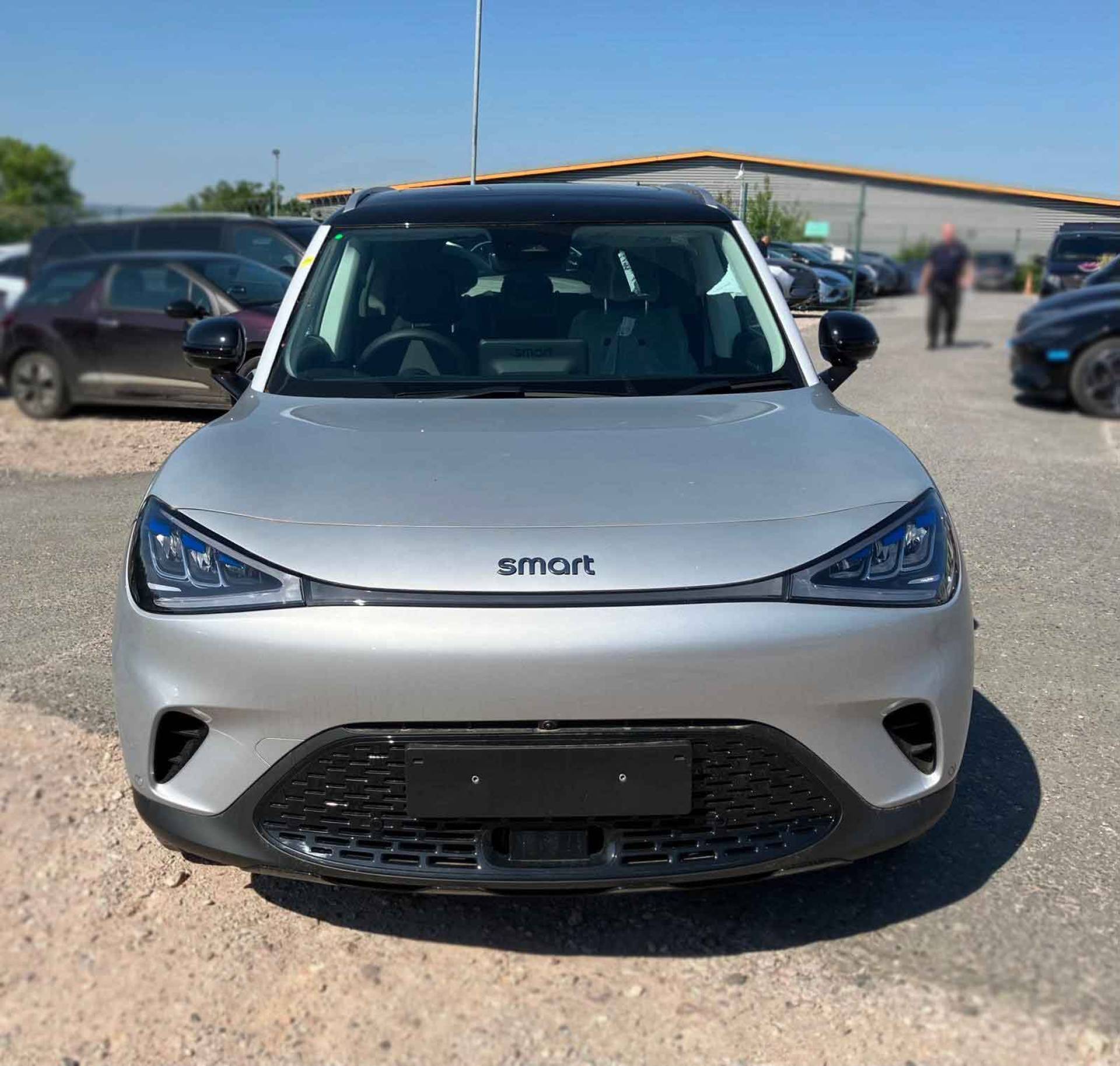

Will affordable options like the Smart #1 help EV's dominate the UK by 2030?
Our King is about to move into battery technology, according to the Express. His Royal Highness is allegedly investing around £160,000 into an unnamed all-electric Lotus to utilise around his estate. Painted in the traditional Royal Claret of course.
With the King being well-known for being pro-environment and all things green (and holistic) moving into the battery technology, fuelled by renewable electricity sources, adds further credence to his resolute position.
The phrase “do as I say. Not as I do” comes to mind in these situations, where influencers, celebrities and Royals make very clear and direct statements with how “we” should live but then do not replicate the behaviours themselves. If the article is to be wholly correct, the UK’s Royal estate will be converting to BEV options, including all the cars, vans and limousines, which means any automotive brands will need to ensure that their factories and engineers are ready.
With brands like Bentley working with the Royal Family, there will be some work required to keep up with the demands being placed. But how do the rest of us make the jump across you might ask?
It's not all electric Lotus and Bentley products which many automotive brands are producing (with £150,000+ price tags) for people, businesses and Councils in the UK. There is a great example in the recent BBC article about Torridge District Council, detailing the South-West council’s decision to add 3 new electric vans to their fleet.
As per their website these vehicles were “an easy decision to invest in …not only are there long-term cost savings, but this will contribute to our on-going efforts to be carbon neutral”. Two vehicles will be utilised by the Estates Team for maintenance tasks with another being used by the Rangers Team to help with volunteering events.
Given the vehicles will be housed at the central offices, Riverbank House in Bideford, they will be fuelled via electricity generated from solar panels on the building. As we touch on the notion of affordability, remember that the monthly finance price is not the only thing to be considering.
When many customers walk into the showroom, or look at vehicles online, their first view is the price tag in the window or on the website. Often referred to as the OTR, or on the road, this is ultimately the full price and liability to you or the business.
Some manufacturer websites do not provide this, as each dealership will use different pricing strategies, and they may instead use the phrase List Price for the customer. The argument which many anti-EV protagonists have used is that battery technology is more expensive on a like for like comparison between comparable vehicles.
Added to this, is that there is a shortage of cheaper options for retail and private customers to enjoy i.e... the Ford Fiesta / Ford Puma of the people. There may be an inkling of truth to this dating back a few years when EVs first started, especially with the Tesla Model 3, BMW i4 and Polestar 2 options.
Company car and salary sacrifice specific, these were cost obstructive to those customers in the UK who do not enjoy the great tax advantages for using a zero-emission vehicle. So many decided to stick with the BMW 320d and 320i options instead.
However, the message is now clear and you can see that in the manufacturer reaction. Like for like vehicles are generally similar, for example Vauxhall had a campaign to stress that moving into electric would be no more expensive than petrol or diesel equivalents. Similar activity has taken place across other car makers.
To supplement this, more cost-effective types of cars are launching like the MG S5, the Renault 4 E-tech, the BYD Atto 2, the Ford Puma Gen-E and the Citroen e-C4. These are not luxury or unaffordable vehicles and do not go beyond the £30,000 threshold which puts many potential buyers off. However, it isn’t just the vehicle price which is helping customers go green.
Running costs are a key part of enjoying the electric car lifestyle. Where personal and business customers jointly benefit is with the Whole of Life cost savings these vehicles offer. This is a supplemental type of affordability within the process.
Take the “fuel” for example, when you benefit from the amazing charging tariffs for domestic charging, you can achieve some eye-wateringly small bills. Looking at the 66 kWh Smart Hashtag EV, which would be just £6.20 for a full tank at a rate of 10 pence per kWh. The smaller Hashtag 1 with the 49kWh battery would be just £4.70.
With some brands now offering a free home charger, or contributing to your install, the obstacles to the transition are being removed. Throw into this the cheaper servicing and maintenance bills, with many cars now requiring servicing on 15,000 - 20,000 mile intervals every 2 years as opposed to a yearly 10,000 mile obligation for the combustion ones. Even Smart offer free service and maintenance with their new cars. It is these costs, along with your insurance, which should form part of the entire calculation.
One brand which is trying to push a cheaper and more accessible hatchback is the Smart group. An off-shoot of the Mercedes group, the Smart team are engineering smaller and cheaper all-electric options which are looking to “elevate the everyday” and “infuses individual mobility with practical uniqueness”. Ranging from around £29,650 to £44,960, there is essentially an option for each and every customer.
For our leasing customers, do consider that the OTR is only so relevant, with fleet discounts and residual values dictating the prices we can provide. For 2025, and beyond, the cars to choose from include the:
- Pure - the basic model offers Cybersparks LED lights, comfort suspension, rain sensing wipers, 2 keyfobs, follow me home lights, heating steering wheel, climate control, active cruise control, keyless start, lane departure warning and lane change assist;
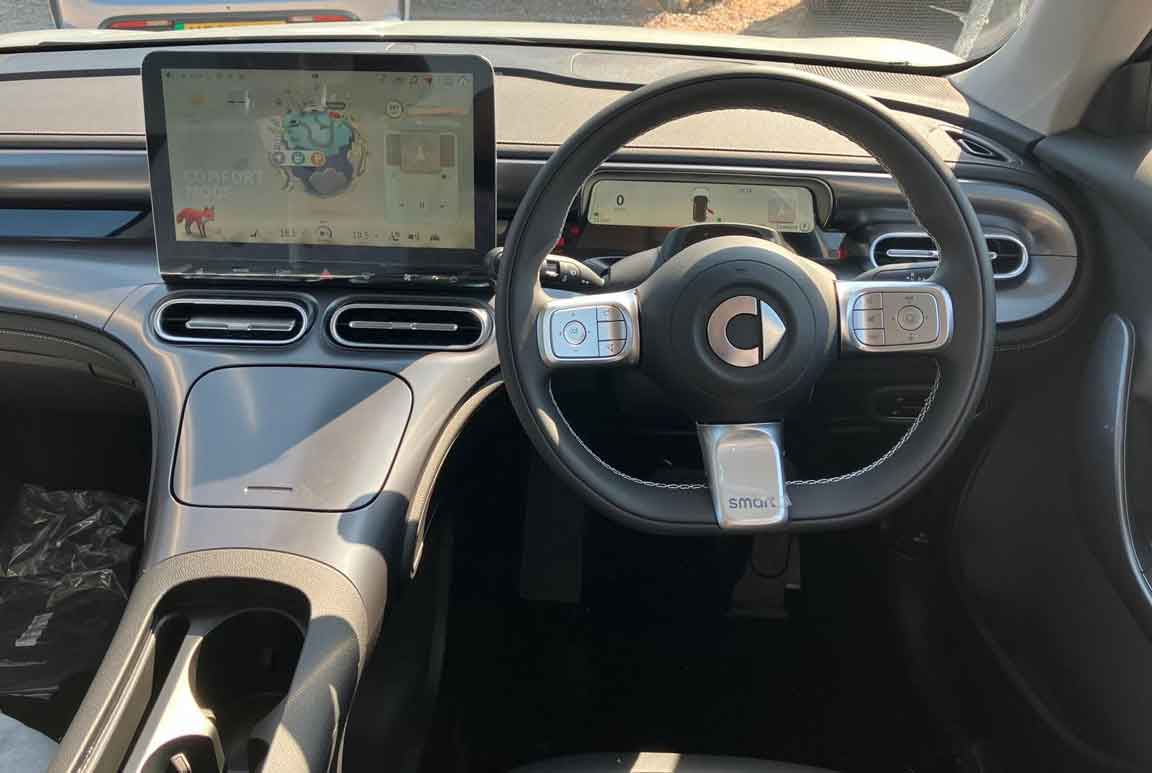
- Pro and pro+ - this model includes wireless phone charging, Halo Roof, 19” alloys, powered tailgate, electrically adjustable heated door mirrors, frameless doors, privacy glass, 4-way lumbar support, 6-way powered driver seat adjustment, heated seats, 360 degree camera, navigation, 12.8” central screen and the 9.2” HD cluster;
- Premium - this model includes 19” Rotor alloys, courtesy lights, automatic headlamp levelling, heat pump, air quality, head up display and Beats sound system with 13 speakers; and
- Brabus - 19” Dynamo, sporty body style, red painted calipers, alcantara sport-style steering wheel, ventilated driver and passenger seat
To spec up your perfect #1 just head to the Smart brand website.
But how does the Smart Hashtag 1 perform - is it a good EV?
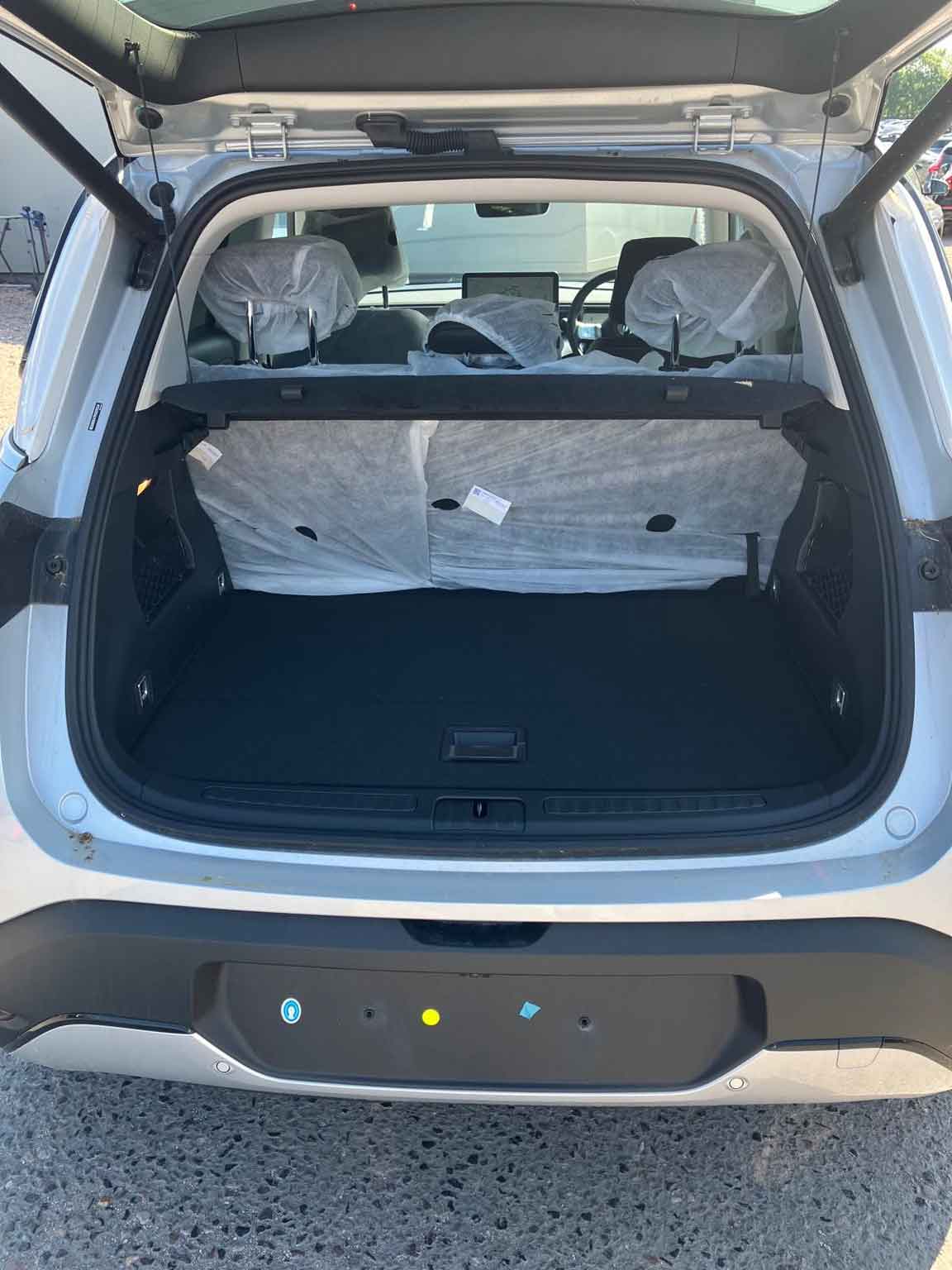
- Pure – this will have a 47 kWh usable battery which will offer 0 – 62 times of 6.7 seconds, 112 mph top speeds and 200 kW (or 268hp). Expect a combined winter range of 130 miles with warmer weather allowing for 180 miles - a combined 155 miles. On charging, the 7.4 kW AC max will allow 7 hour and 30 minute 0 – 100% charging times with the 130 kW DC maximum allowing 32 minute 10 – 80% times. A cargo volume of 323L is available with this car. It has a vehicle fuel equivalent of 133 mpg. This EV will have Bidirectional charging - a 3.7kW AC exterior adapter (V2L). The car will not be able to tow;
- Pro – this will have a 47 kWh usable battery which will offer 0 – 62 times of 6.7 seconds, 112 mph top speeds and 200 kW (or 268hp). Expect a combined winter range of 130 miles with warmer weather allowing for 180 miles - a combined 155 miles. On charging, the 7.4 kW AC max will allow 7 hour and 30 minute 0 – 100% charging times with the 130 kW DC maximum allowing 32 minute 10 – 80% times. A cargo volume of 323L is available with this car. It has a vehicle fuel equivalent of 133 mpg. This EV will have Bidirectional charging - a 3.7kW AC exterior adapter (V2L). The car will not be able to tow;
- Pro+ and Premium – the 62 kWh usable lithium battery will deliver 0 – 62 times of 6.7 seconds, 112mph top speeds and 200 kW (or 268hp). Expect a combined winter range of 170 miles with warmer weather allowing for 235 miles - a combined 205 miles. On charging, the 22 kW AC max will allow 3 hour and 30 minute 0 – 100% charging times with the 150 kW DC maximum allowing 27 minute 10 – 80% times. A cargo volume of 323L is available with this car. It has a vehicle fuel equivalent of 134 mpg. This EV will have Bidirectional charging - a 3.7kW AC exterior adapter (V2L). The car will be able to tow 750kg (Unbraked) and 1600kg (Braked); and
- Brabus – the AWD model has a 62 kWh usable lithium battery and will deliver 0 – 62 times of 3.9 seconds, 112mph top speeds and 315 kW (or 422hp). Expect a combined winter range of 170 miles with warmer weather allowing for 235 miles - a combined 205 miles. On charging, the 22 kW AC max will allow 3 hour and 30 minute 0 – 100% charging times with the 150 kW DC maximum allowing 27 minute 10 – 80% times. A cargo volume of 323L is available with this car. It has a vehicle fuel equivalent of 131 mpg. This EV will have Bidirectional charging - a 3.7kW AC exterior adapter (V2L). The car will be able to tow 750kg (Unbraked) and 1600kg (Braked).
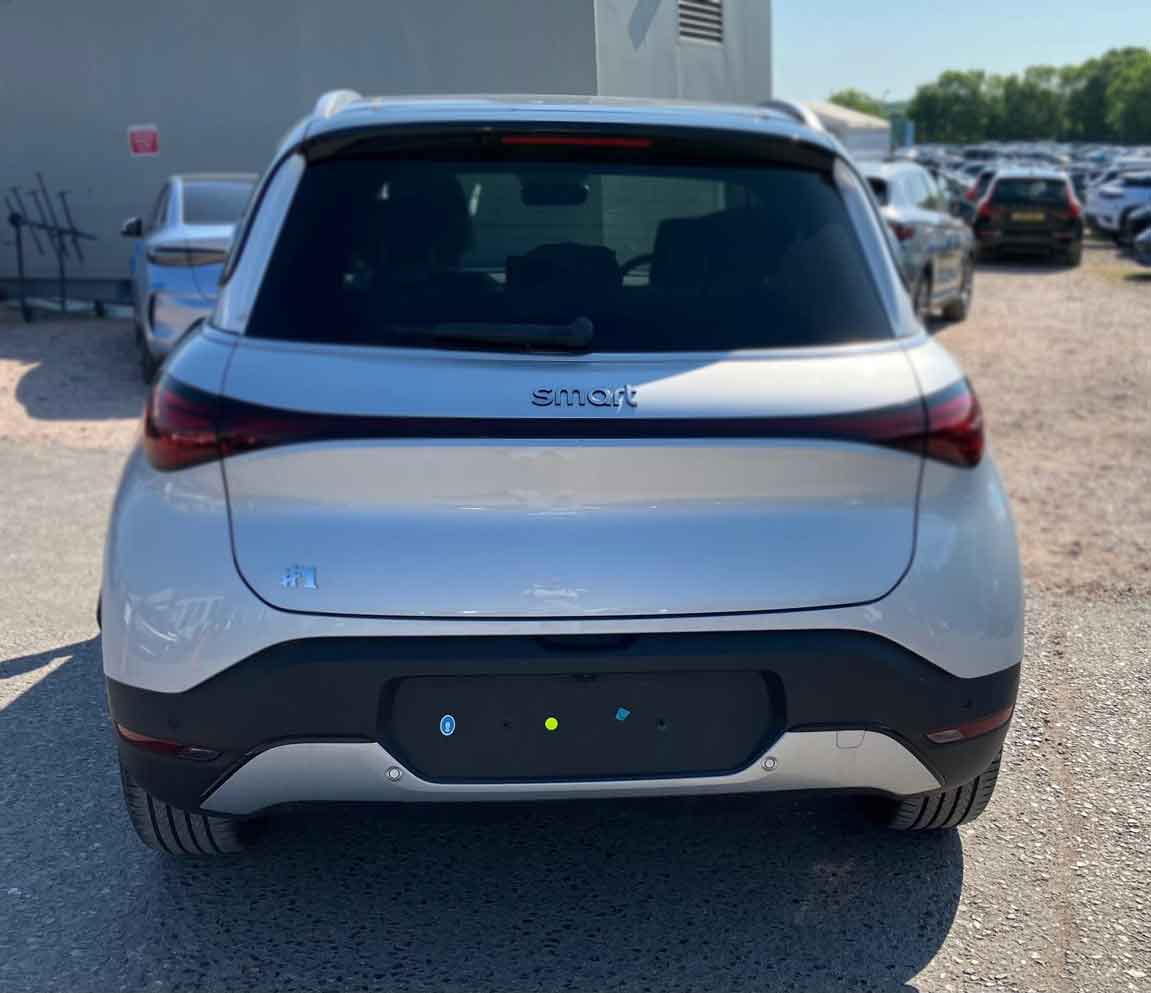
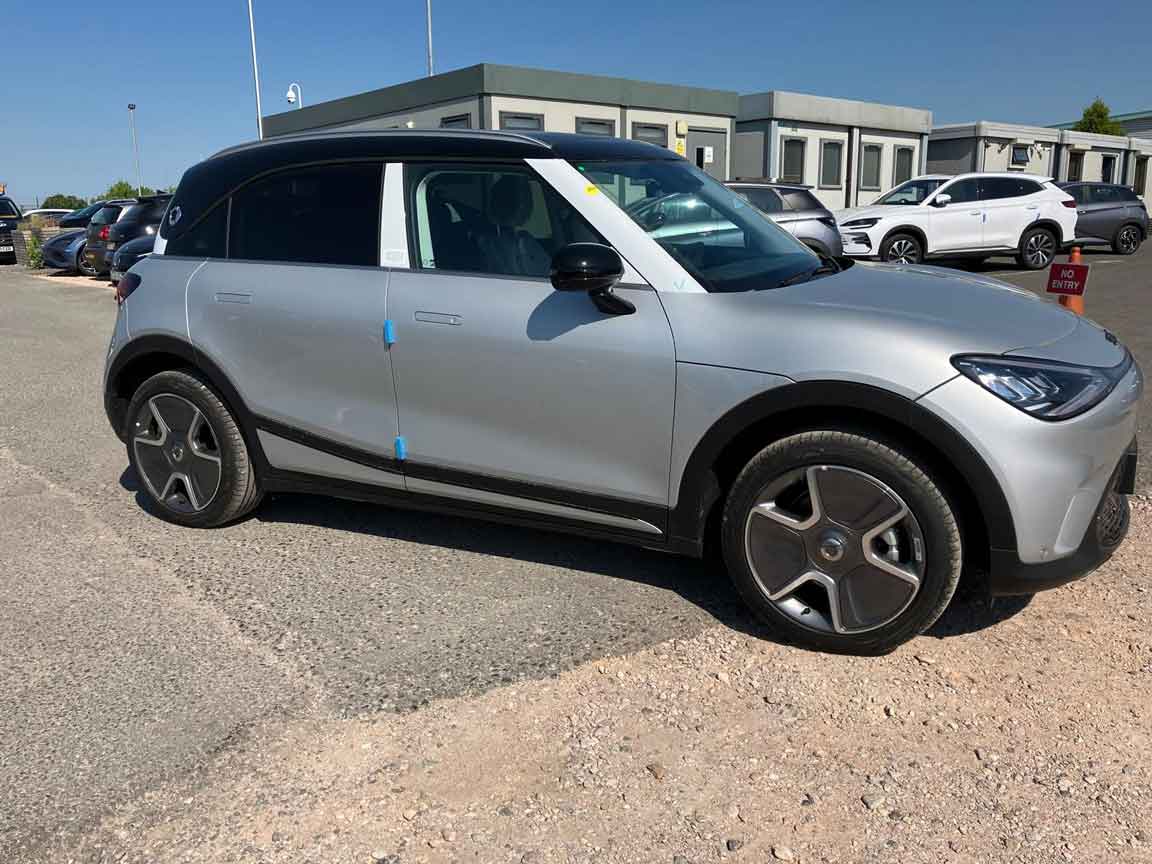
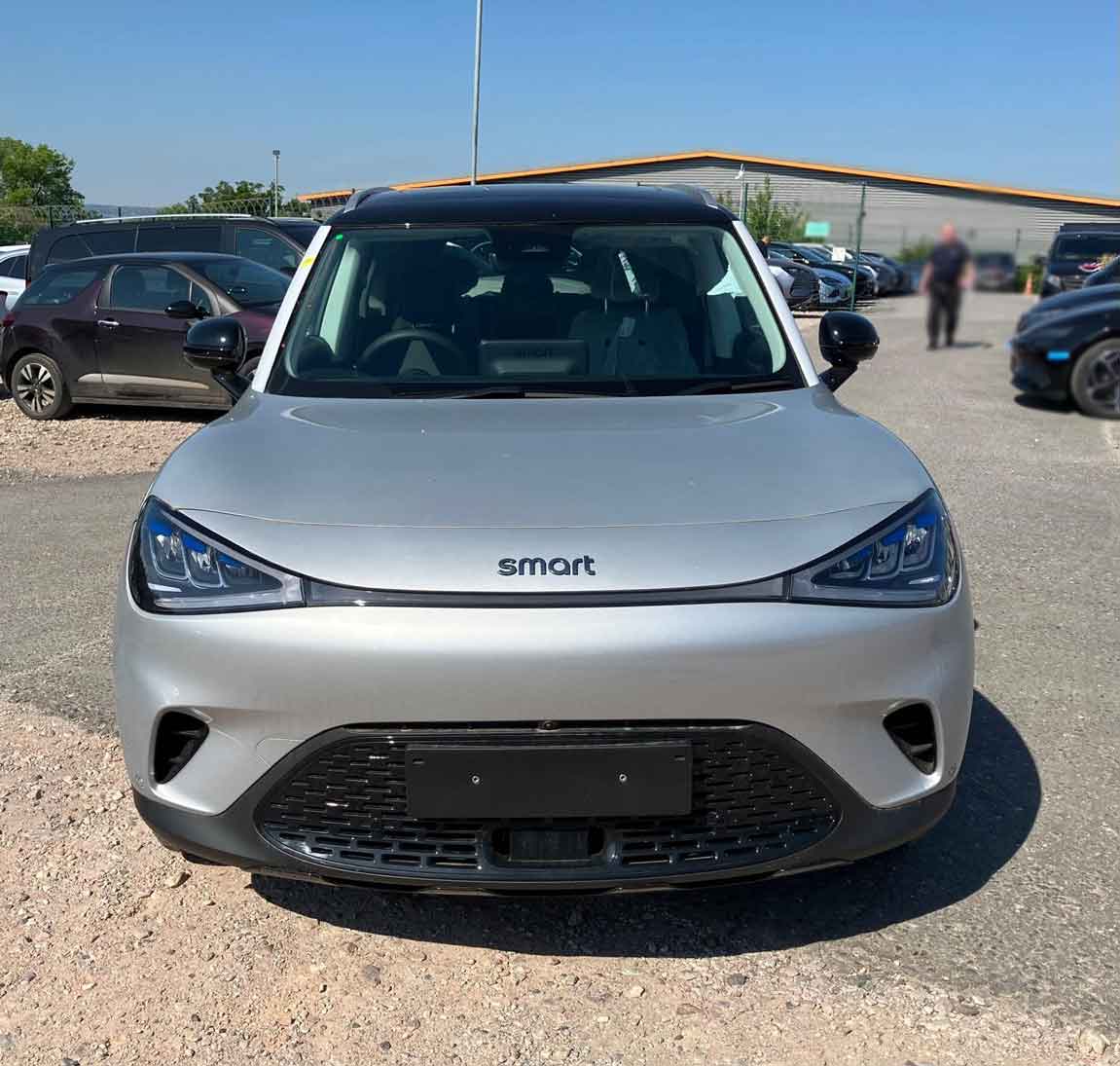
In terms of the car shown, the Smart Hashtag 1 Hatchback 200kW Pro+ 66kWh 5dr Auto, this is based on the following configuration:
- Metallic - Cyber silver
- Man-made leather - After dark
- 19” Amps alloy wheels
- Eclipse black roof
Pro+– the 62 kWh usable lithium battery will deliver 0 – 62 times of 6.7 seconds, 112mph top speeds and 200 kW (or 268hp). Expect a combined winter range of 170 miles with warmer weather allowing for 235 miles - a combined 205 miles. On charging, the 22 kW AC max will allow 3hour and 30 minute 0 – 100% charging times with the 150 kW DC maximum allowing 27 minute 10 – 80% times. A cargo volume of 323L is available with this car. It has a vehicle fuel equivalent of 134 mpg. This EV will have Bidirectional charging - a 3.7kW AC exterior adapter (V2L). And the car will be able to tow 750kg (Unbraked) and 1600kg (Braked); and
Want to know more about going into the Smart #1 in 2025?
Head to our dedicated Smart #1 special offers section, or just get in touch with our team on 01942 910 001 or by emailing us at [email protected]
e-car lease work alongside these select finance companies:





e-car lease have a partnership and affiliation with:



Register & get new deals weekly
 Exclusive offers
Electric-only deals
Never miss out
Exclusive offers
Electric-only deals
Never miss out
Talk to one of our experts
01942 910 001 Email usLeasing





© Copyright 2026 e-car lease. All rights reserved. e-car lease is a trading name of CarLease (UK) Ltd, e-car lease is a credit broker and not a lender. We are authorised and regulated by the Financial Conduct Authority. Registered No: 706617. BVRLA Membership No. 1471. Registered in England & Wales with Company Number: 09312506 | Data Protection No: ZA088399 | VAT No: 200422089 | Registered Office: Kings Business Centre, Warrington Road, Leigh, Greater Manchester, WN7 3XG
Made by morphsites®