


Mon-Fri 9am-5pm
Talk to our friendly electric car leasing experts now: 01942 910 001This website uses cookies to ensure you get the best experience. Learn more
Why the success and growth of the UK’s electric car market needs to be handled carefully

The UK’s electric car market needs to be handled carefully because of its success and growth
There have been some significant changes in car buying habits over the last year, with the mass-adoption of both new AND used electric cars very much underway.
The success for car dealerships, leasing brokers and car supermarkets is one such positive story to discuss. However, as part of this growth, we are now experiencing other challenges and considerations as the increasing volume of battery vehicles, means that skillsets and business enterprises must address this sector to ensure it is to grow sustainably and responsibly.
What we essentially want to avoid is a seismic introduction of EVs and yet have insufficient selling processes, insurance premiums, battery manufacturing and vehicle technicians. It has taken us 4 - 5 years to convince the UK population that the future is very much green, and electric, so we now need to reward this faith with corresponding service and diligence.
The recent report in the BBC therefore the type of investment which we all like to see in this segment. As noted, the West Midlands will be launching a £50m scheme to help transform businesses and create more skilled jobs to accommodate the EV sector.
Having been launched by the West Midlands mayor, there will be a series of grants of between £250,000 and £3m to get businesses electric vehicle ready. To ensure corresponding commitment, any grants need to be matched equally by the applicants.
With the region being home to many manufacturers and car / van production centres, the West Midlands team noted that some 1,000 automotive companies are supporting over 30,000 working people. As the UK's retail and business customers move from combustion solutions to electrified ones, the region wants to ensure they are ready with a skillset and acumen to meet the evolving sector.
Having an insurance solution to meet the growing demand is yet another facet that needs addressing according to a recent BBC report. Reflecting on crash-testing of a Dacia Spring EV, the article considers the damage these vehicles incur in accidents, reflecting on the high-voltage port mounted at the front of car which can be impacted in these predicaments.
With the unit being one component, when it is impacted, the unit, the charger, the port and even the charging cable need to be replaced. For most vehicles, this would be a £4,000 cost, which is what insurance companies are not bothering to address and are instead writing off the vehicles.
Suggesting that EVs cost 30% more to repair than a petrol or diesel model, there is a corresponding knock-on effect in the premiums UK drivers are paying.
The article discussed, quite correctly, how the expense of the insurance can act as an obstacle for some drivers and the impression it gives is not what we want to be creating. Part of the issue is due to the way in which an EV is designed, as the principal focus is to keep weight down.
This means using a glued approach, rather than separate fixtures, which prioritises efficiency and weight over ease of fixing. With a battery being up to 40% of a car’s value in some instances, having to replace rather than fix is not ideal.
More recently, the swathe of Chinese imports has propagated this further, as labour rates in China are not as high as Europe, so the notion of spending time to fix and resolve is not a hurdle in the same way it is in the UK. As noted in the article above, you also have the shortage of parts and skilled technicians to deliver the solutions, which is why investment is needed into the service element of the industry too.
With better solutions and more economies of scales in parts and businesses solving the issue, the premiums for insurance should be positively impacted. Less hurdles, more sales!
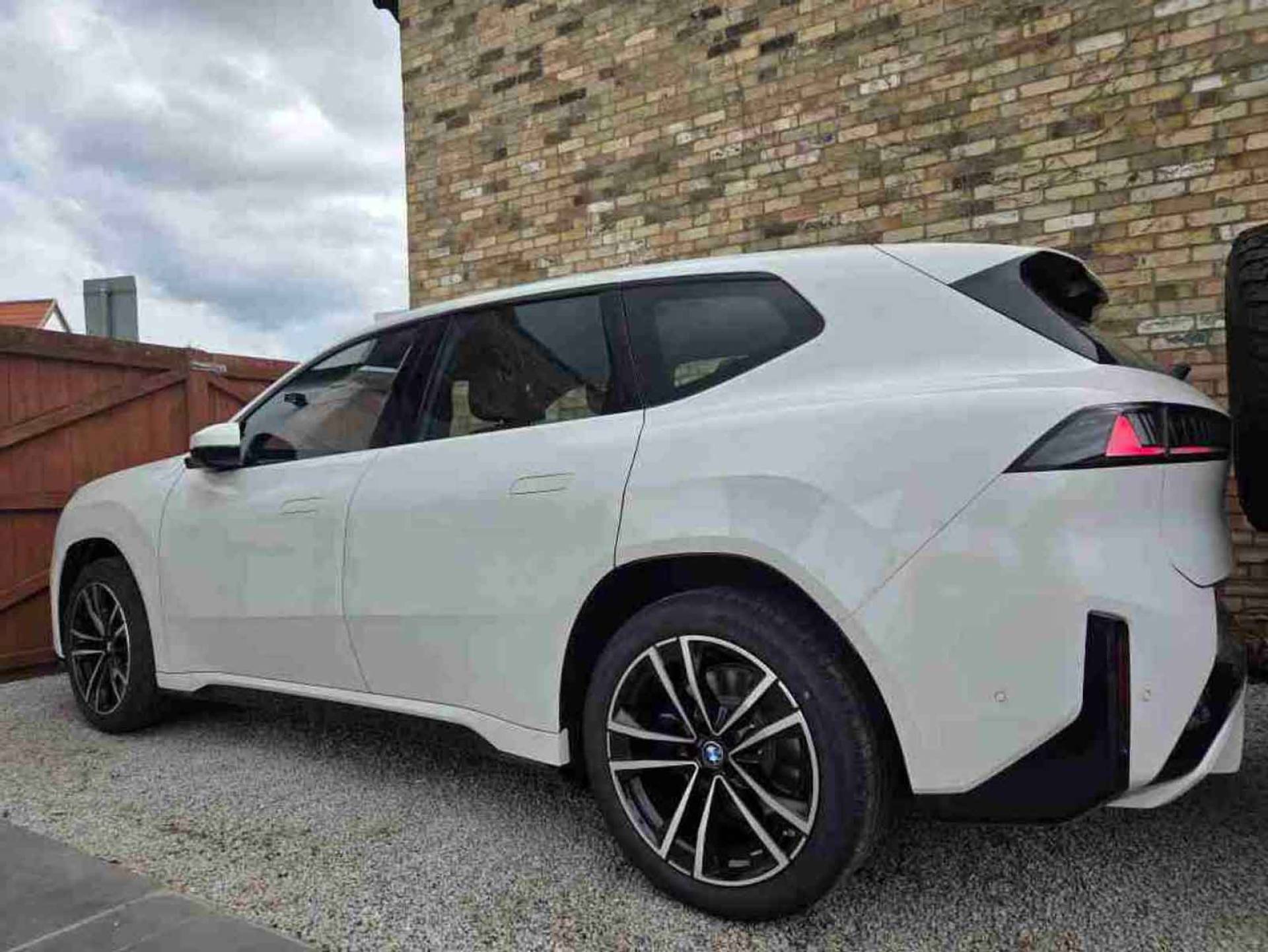
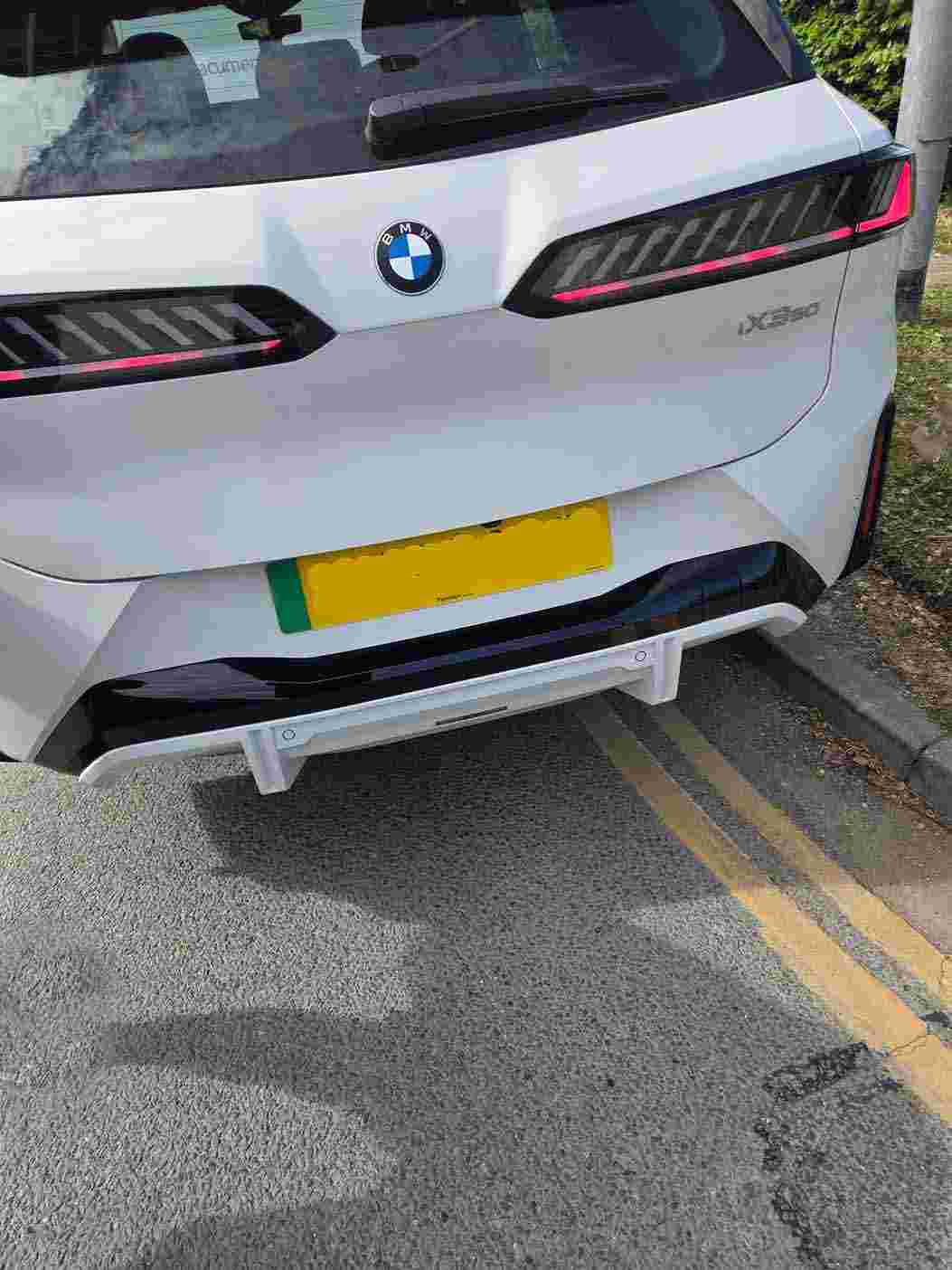
One considerable solution for the high-mileage leasing customer, which has taken the market by storm, is the new BMW iX3. Pushing boundaries that even e-car lease never thought was possible, the 2026 model can travel nearly 400 miles on a full charge on a combined real-world analysis.
In our guide to EV ranges in 2026 , it is clear that the BMW iX3 is one of the best solutions for UK drivers, surpassed only by the Mercedes EQS and the new BMW i3 saloon. One of our fleet customers recently upgraded their fleet with this option.
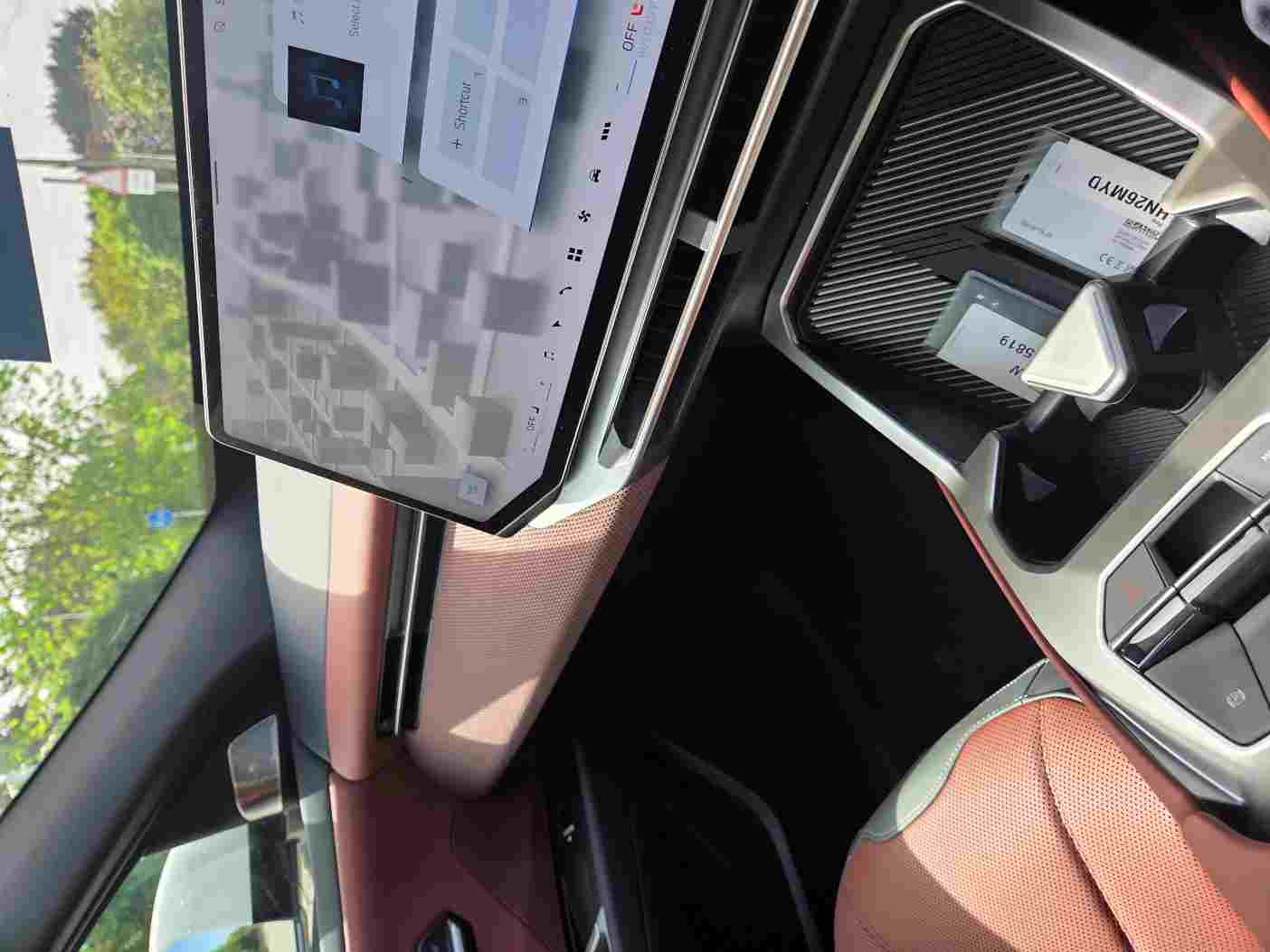
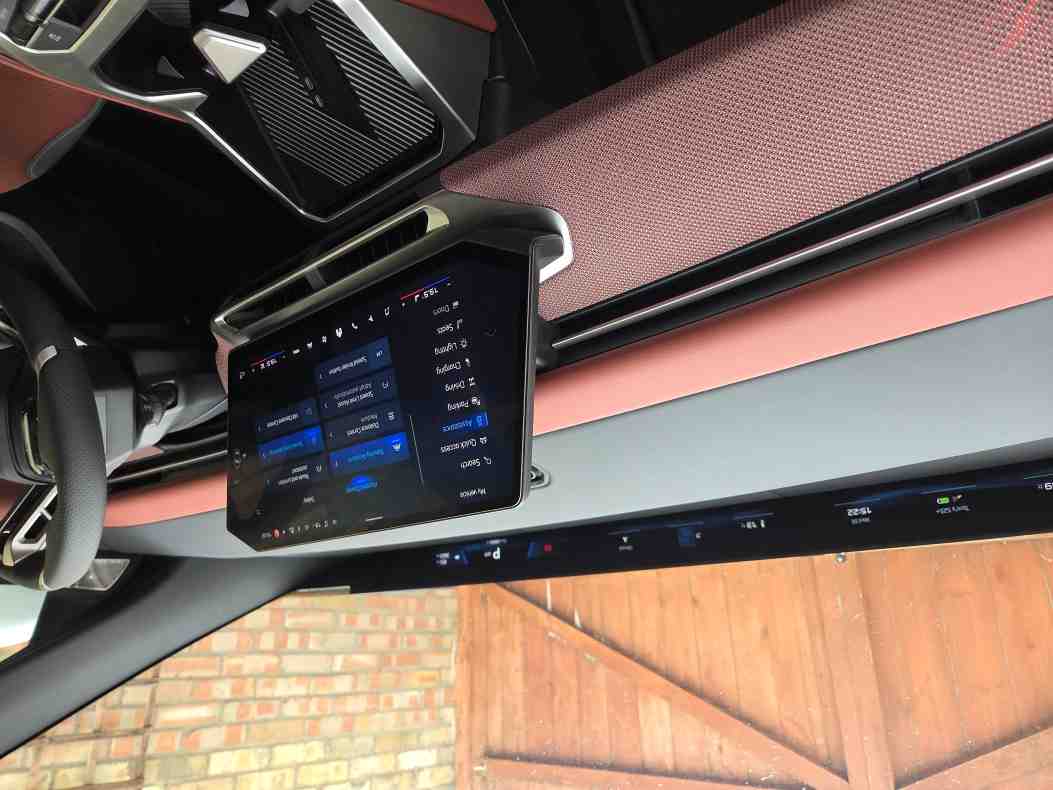
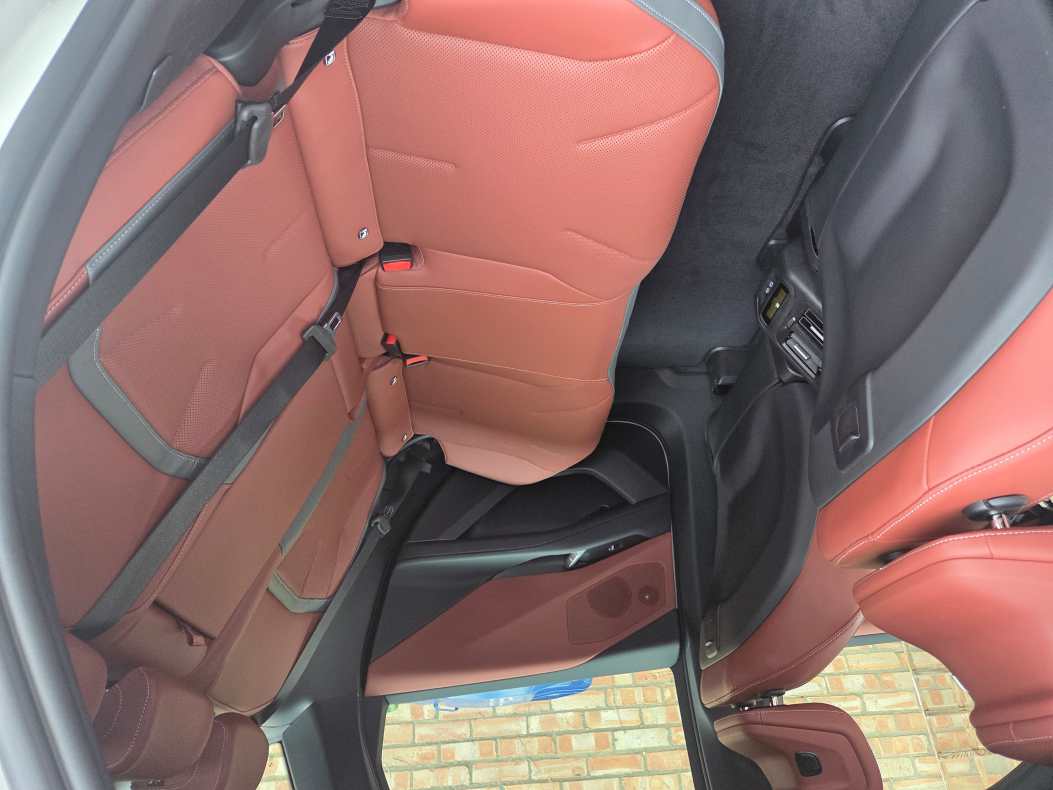
In terms of the car shown the BMW iX3 Estate 345kW xDrive50 M Sport 113kWh 5dr Auto [Tech pack] Pure Electric Vehicle, this is based on the following configuration:
- Alpine White Solid Paint
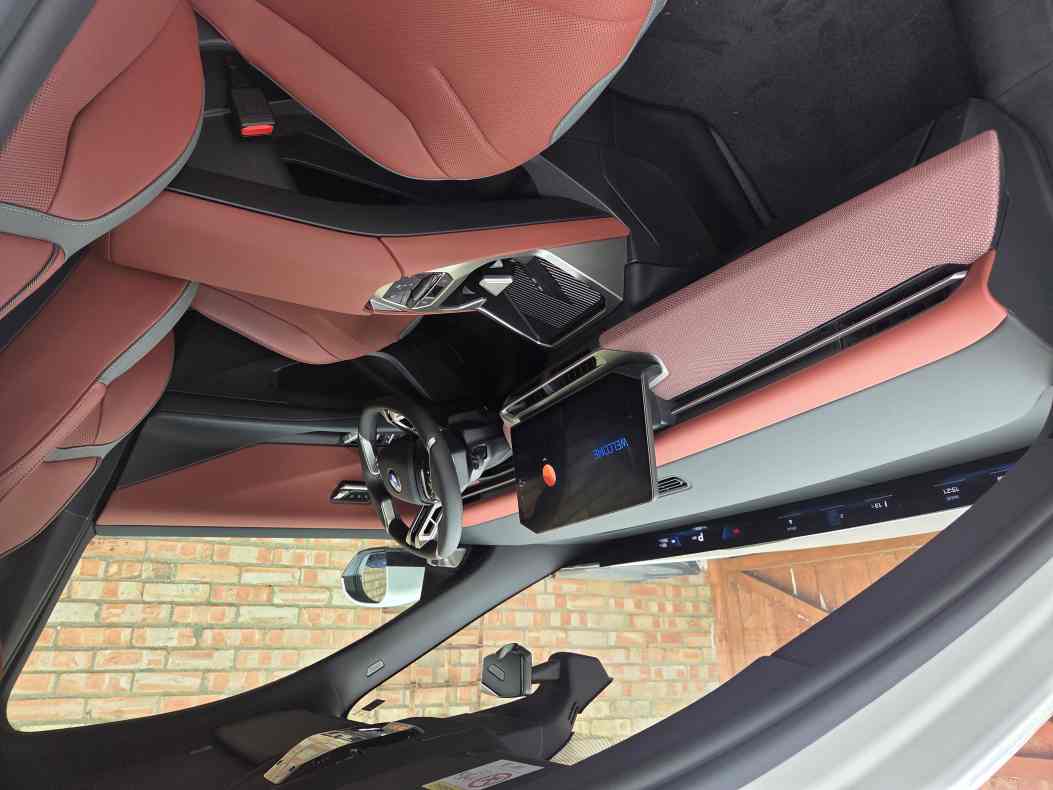
- Contemporary Castanea Bicolour interior trim
- Heated Steering Wheel
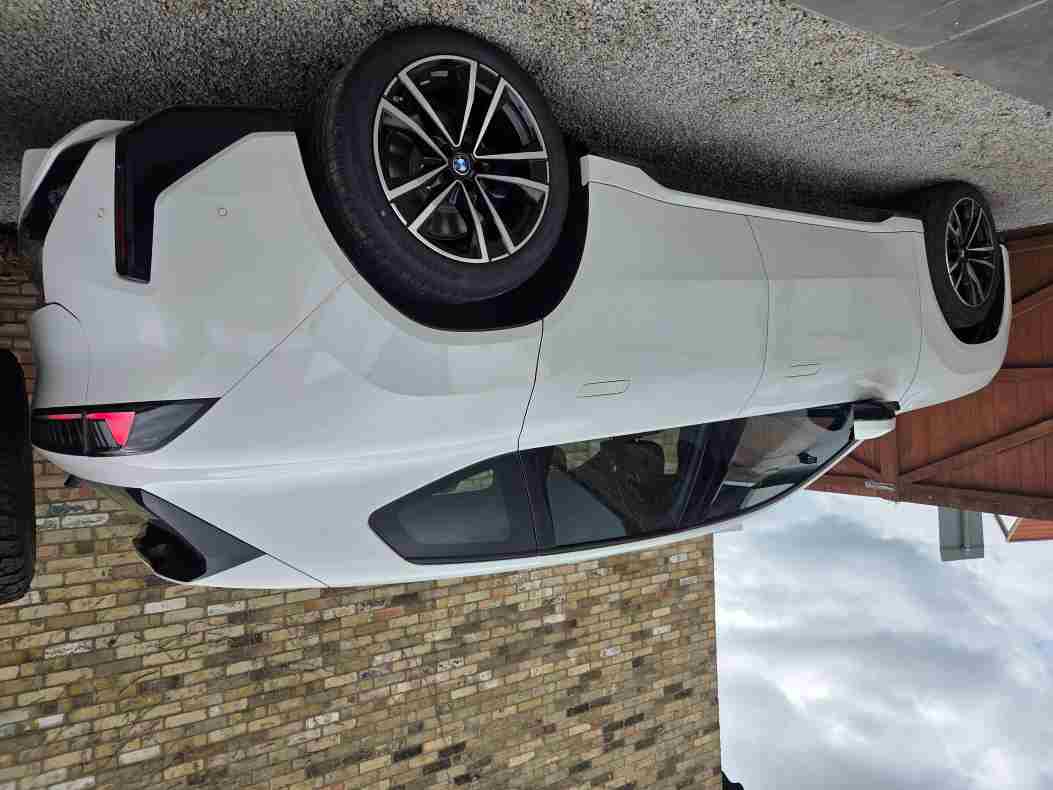
- 20" M light double spoke M bicolour alloy wheels - style 1048
- 8 way electrically adjustable multifunctional seats for driver and front passenger
- Lumbar support with massage function with 7 massage programmes
So what specification options are there for BMW iX3 SUV EV?
As at April 2026, you can choose between the line-up below:
- Base Line – from £60,655 this is standard with 20” alloys, Driving Assistant Plus, wireless charging, active guard, automatic tailgate, expanded exterior mirror package, LED headlights, air conditioning with 2-zone pre-conditioning, electric front seats, BMW Dynamic Performance Control, Dynamic Brake Control and front heated seats;
- M Sport –from £63,155 this includes 20” alloys, M Black interior design, front / rear bumpers, roof spoiler, BMW Panoramic Vision, sports steering wheel and dark blue calipers; and
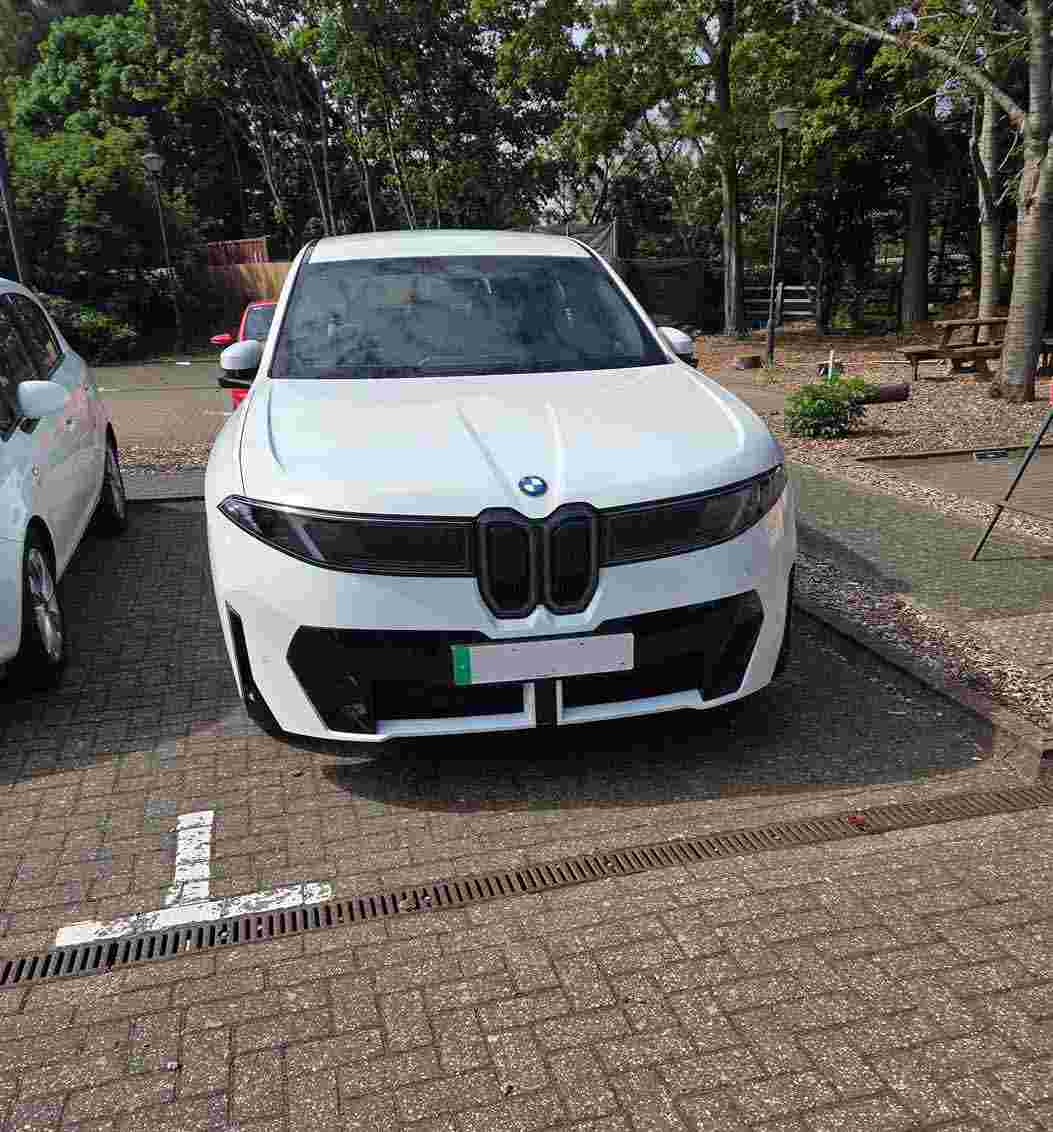
- M Sport Pro – from £64,655 this includes M Sport seat belts, BMW Iconic Glow, red calipers and Front M Sport Seats.
In terms of colours choose between Alpine White, Space Silver, Polarised Grey, Brooklyn Grey, Black Sapphire and Ocean Blue.
A whole host of 20” - 22” alloy upgrades are available, such as the 1046 Bicolour 20” or the 22” 1053 Bicolour options. Some of the interiors include the Vivid Grey, Contemporary Digital White, Contemporary Black or the Castanea.
In terms of additional packages, consider the Technology Plus Pack (3-zone air conditioning, 3D HUD and Harman/Kardon surround sound). Other options include sun protection glass, panoramic glass sunroof, Iconic Glow, heated steering wheel and the towbar (which includes Trailer Stability Control).
How will the new 2026 BMW iX3 SUV perform?
- 50 xDrive - AWD SUV will have a 108.7 kWh usable battery which will offer 0 – 62 times of 4.9 seconds,130 mph top speeds and 345kW (or 463hp). Expect a combined winter range of 330 miles with warmer weather allowing for 450 miles – a 390-mile combined. On charging, the 11kW AC max will allow 11 hour and 45 min 0 – 100% charging times with the 400 kW DC maximum allowing 21 minute 10 – 80% times. A cargo volume of 520L is available with this car. It has a vehicle fuel equivalent of 140 mpg. You can tow 750kg (Unbraked) and 2000kg (Braked). The new iX3 has Bidirectional Charging - it also has V2L capabilities via an external 3.7kW AC type 2 adapter. The Heat Pump is available as a standard option.
Want to know more about going into the BMW iX3 SUV Electric?
Head to our dedicated BMW iX3 special offers section or speak to our experts directly on 01942 910 001 or by emailing us at [email protected]
e-car lease work alongside these select finance companies:





e-car lease have a partnership and affiliation with:



Register & get new deals weekly
 Exclusive offers
Electric-only deals
Never miss out
Exclusive offers
Electric-only deals
Never miss out
Talk to one of our experts
01942 910 001 Email usLeasing





© Copyright 2026 e-car lease. All rights reserved. e-car lease is a trading name of CarLease (UK) Ltd, we are a credit broker and not a lender. We are authorised and regulated by the Financial Conduct Authority. Registered No: 706617. BVRLA Membership No. 1471. Registered in England & Wales with Company Number: 09312506 | Data Protection No: ZA088399 | VAT No: 200422089 | Registered Office: Kings Business Centre, Warrington Road, Leigh, Greater Manchester, WN7 3XG
Made by morphsites®