


Mon-Fri 9am-5pm
Talk to our friendly electric car leasing experts now: 01942 910 001This website uses cookies to ensure you get the best experience. Learn more
Will Pay per Mile affect electric cars for business?


Business Cars - Will they be affected by Pay per Mile?
There has never been a secret about the Government wanting to address the shortfall in income created by the move from petrol and diesel to battery electric vehicles.
As part of the push into zero-emissions, which happens to be a key part of the the UK’s ZEV Mandate (currently expecting 80% of new cars to be zero-emission by 2030), there were certain advantages offered to the driver of an electric car.

Now, we are not talking about company car tax and other fiscal incentives in corporate car schemes, we are referring to the benefits which every driver received, in particular the incentives surrounding road tax (also known as VED or Vehicle Excise Duty). Unlike the more emitting and “dirtier” vehicles, anyone driving an EV got the benefit of a free pass when it came to this obligation.
However, the EV’s own success and evolution has created some degree of an issue for the Government, to the extent that it began to consider on should, and how, a taxation system could be introduced for those driving EVs on UK roads.
With advocates for the EV industry quite passionately pushing back on this suggestion and other groups lobbying against potential charges, we did wonder whether this would come to fruition. On 13 July, as you can see on the .Gov website there was an absolute confirmation for the Electric Vehicle Excise Duty (eVED) measure.
When and How Much is the EV tax?
From 1 April 2028 the eVED will commence and will effectively act as an extension to the VED regime already in place. Consistent with the messages disseminated last year the charge will be as follows:
- 3 pence per mile for an EV (any battery electric vehicle)
- 3 pence per mile for a HFCEV which is a car
- 1.5 pence per mile for a PHEV (any variant of plug-in hybrid electric vehicle)
.jpg)
While this is the starting rate, the Government have almost certainly confirmed this is not where it ends. The rates will be uprated in 2029 and 2030 in line with Consumer Price Inflation (CPI). On the basis of generally increasing costs, it is almost certain these figures will increase moving forwards. UK drivers will need to budget for this.
To help our e-car lease customers, a charge calculator will be added to our “Living with your..” vehicle analysis to ensure that you are thoroughly informed and aware of the upcoming charges. We already have a quick and simple eVED calculator on our website which you can use to work out what the annual mileage will do to your eVED costs.
How will eVED be managed?
The DVLA - the Driver and Vehicle Licensing Agency - will administer the scheme. The expectation is that a UK driver will:
- Provide an odometer (mileage) reading for their vehicle; and
- Estimate the mileage for the upcoming tax year
In estimating your mileage, there will be an upfront charge (tax) paid to the DVLA and then this will be reconciled year on year. When a vehicle is due the MOT, which is only on its third anniversary, the data collected at the MOT stage will be used to monitor the mileage of the vehicle and the tax payable.
Is this unfair - why are the Government proceeding with it?
There was a great deal of objection to the proposed measure. While mass-adoption is well underway, as it has been since 2020, the statistics for uptake and registrations are heartening but are always subject to so many pressures and external incentives / disincentives.
The recent increase in oil prices has made a huge impact on the UK motoring market questioning the efficacy of petrol or diesel. This is why used EVs, as well as new ones, are so popular in 2026. However, the rapid increase in ZEV Mandate expectations, as we move to 2030, is making those invested in this segment far more nervous.
The Government state that it is “fairness” as to why this measure has been introduced, with drivers of petrol and diesel vehicles effectively paying fuel duty at the pump, which contributes to the UK road systems.
Zero-emission drivers are not doing this, with many charging at home or at workplaces. With the Office for Budget Responsibility predicting declines in fuel duty, the new eVED is about a motorist paying for their use of the roads. This is why a mileage calculation has been adopted rather than a cost based on the vehicle value or the driver’s circumstances.
The legislation - Vehicle Excise and Registration Act 1994 - will be revised to include the amends relating to the eVED. From 1 April 2028, this will be the law for UK drivers.
Are business car schemes at risk?
The company car and salary sacrifice market has shown little signs of slowing down. The growth for zero-emission product in this area still persists, as the Government seeks to make no real changes to this segment.
While the BiK, Benefit in Kind, does continue to increase at 1% per year, until this reaches anywhere near 10 - 15%, this is not going to be a tax which dissuades electric vehicle uptake. This is especially so with punitive tax measures on business cars which are petrol or diesel .
The only potential kicker will be for the PHEV. The hybridisation of our vehicles has been propagated as quickly as the electrification of them. What we perhaps did not foresee was the level of interest in customers wanting a combustion vehicle but with some of the electric benefits we are enjoying.
As manufacturers have continued to improve their combustion fuels, and their battery efficiencies, there are some considerably attractive plug-in cars for businesses. Yet many potential drivers often stand on the precipice because the BiK on a PHEV is somewhat higher.
When you add a pay per mile tax to the equation, some employees may make the move to go all electric or instead utilise personal contract hire / personal contract purchase on a hybrid vehicle.
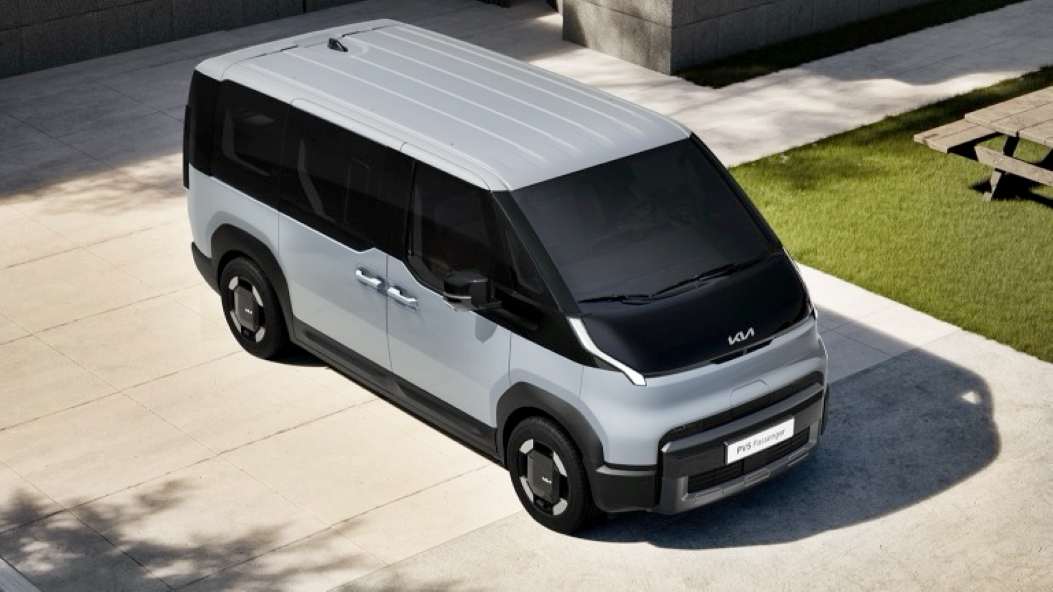
Discover our Kia PV5 Passenger 7-Seater EV lease offering
The updated Kia Passenger 7-seater EV, which you can build and configure at the Kia website, will be hoping that businesses needing people carrying capacity are still leasing BEVs with a robust confidence.

The PV5 passenger is an everyday comfort vehicle with the benefit of flexibility for your everyday life. A true MPV, the Kia is aiming to be the versatile family EV with fast charging and convenient safety. Bold with the futuristic tiger face, signature lighting and extended profile, the PV5 is designed around the driver with the wide view, clear displays and ergonomic interior.
Smooth and quiet, this is a true family 7-seater which aims to be a real driver’s car and utilise the dedicated battery platform to ensure lower ground clearance and optimal efficiency.
How does the Kia PV5 perform?
- PV5 Passenger 7 seater - this FWD SUV will have a 67 kWh usable battery which will offer 0 – 62 times of 10.6 seconds, 84 mph top speeds and 120 kW (or 161 hp). Expect a combined winter range of 175 miles with warmer weather allowing for 235 miles – 210 miles combined. On charging, the 11kW AC max will allow 7 hour and 15 minute 0 – 100% charging times with the 150 kW DC maximum allowing 39 minute 10 – 80% times. A cargo volume of 318L (785L with the seats down) is available with this car. It has a vehicle fuel equivalent of 127 mpg. This option can tow 750kg (unbraked) and 750kg (braked). This EV will have Bidirectional charging – V2L via the type 2 adapter for 3.6kW AC. The heat pump is a standard option.

Need more help and advice on a new or used EV?
Head to our Kia PV5 lease Offers section or just get in touch with our expert team on 01942 910 001 or by emailing us at [email protected]
e-car lease work alongside these select finance companies:





e-car lease have a partnership and affiliation with:



Register & get new deals weekly
 Exclusive offers
Electric-only deals
Never miss out
Exclusive offers
Electric-only deals
Never miss out
Talk to one of our experts
01942 910 001 Email usLeasing





© Copyright 2026 e-car lease. All rights reserved. e-car lease is a trading name of CarLease (UK) Ltd, we are a credit broker and not a lender. We are authorised and regulated by the Financial Conduct Authority. Registered No: 706617. BVRLA Membership No. 1471. Registered in England & Wales with Company Number: 09312506 | Data Protection No: ZA088399 | VAT No: 200422089 | Registered Office: Kings Business Centre, Warrington Road, Leigh, Greater Manchester, WN7 3XG
Made by morphsites®